
This Laos Travel Guide is created using official tourism resources, verified travel advisories, and real traveler insights from across Southeast Asia. All information has been reviewed and updated for 2026, including visa rules, transportation, costs, safety, and practical travel tips.
- Updated for 2026
- Based on real travel patterns
- Budget-friendly planning
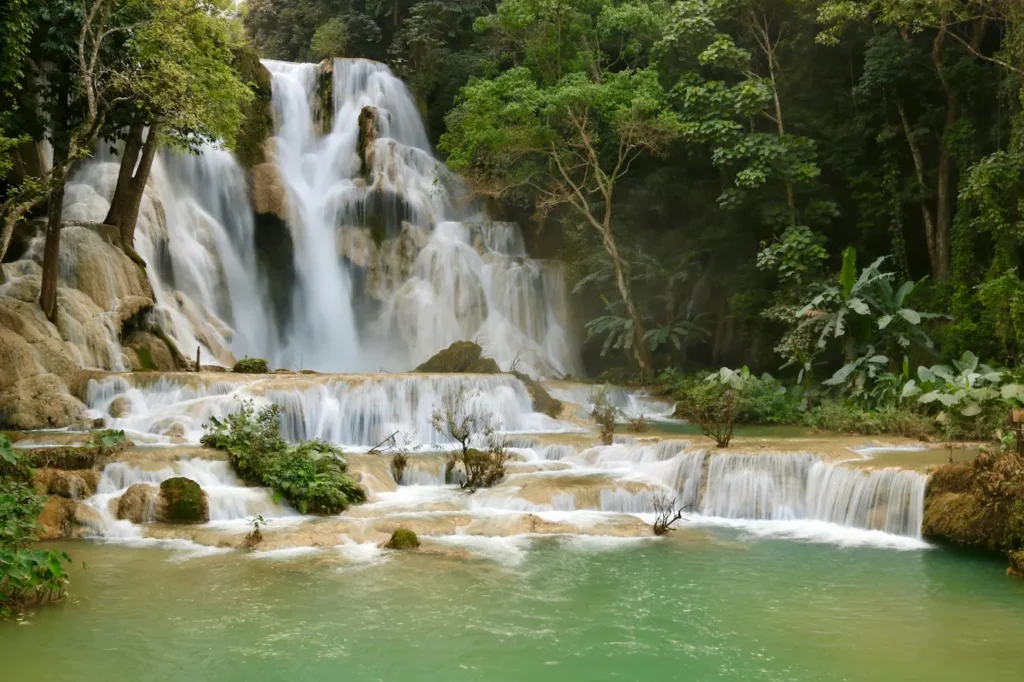
Laos is Southeast Asia’s most underrated destination. While neighboring Thailand and Vietnam attract millions of tourists, Laos remains refreshingly authentic—a place where Buddhist traditions thrive, nature stays pristine, and life moves at a slower, more meaningful pace.
This comprehensive Laos travel guide covers everything you need to plan an unforgettable journey. Whether you’re a first-time visitor wondering where to start, a budget backpacker stretching your dollars, or an adventure seeker looking beyond the typical Southeast Asian route, this guide provides practical information you actually need.
From visa requirements and daily costs to transportation routes, cultural etiquette, and detailed itineraries, we’ll help you navigate Laos with confidence. By the end of this Laos travel guide, you’ll know exactly how to create your perfect Lao adventure.
Table of Contents
Table of Contents
Why Visit Laos? Southeast Asia’s Hidden Gem
Laos offers something increasingly rare in modern travel: authenticity without commercialization. Here’s why this Laos travel guide recommends making Laos a priority:
Authentic Cultural Experiences
Buddhist Traditions:
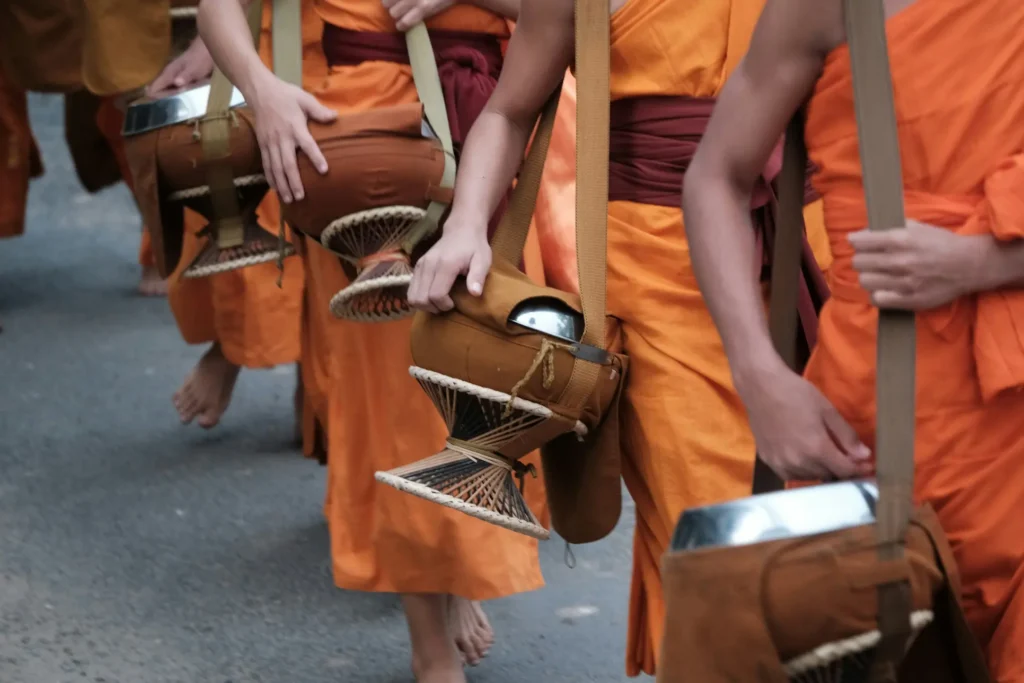
- Daily alms-giving ceremonies unchanged for centuries
- 33+ temples in Luang Prabang alone
- Monks welcoming respectful interaction
- Spiritual atmosphere permeating daily life
Traditional Villages: Ethnic minority communities maintain centuries-old customs:
- Weaving demonstrations in natural textiles
- Traditional cooking methods
- Sustainable farming practices
- Genuine hospitality without tourist performance
Slower Pace of Life: Laos operates on “Lao time”—a concept embracing patience and presence. Markets open leisurely, conversations meander naturally, and rushing feels foreign. This rhythm refreshes travelers exhausted by hectic Asian cities.
Stunning Natural Beauty
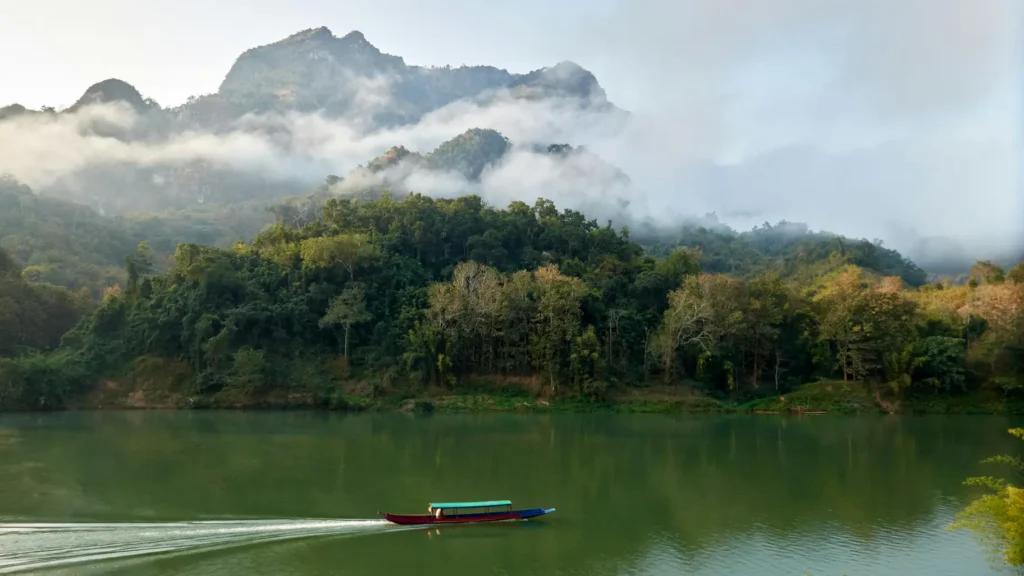
Mekong River: The lifeblood of Laos offers:
- Slow boat journeys through mountainous landscapes
- Riverside villages accessible only by water
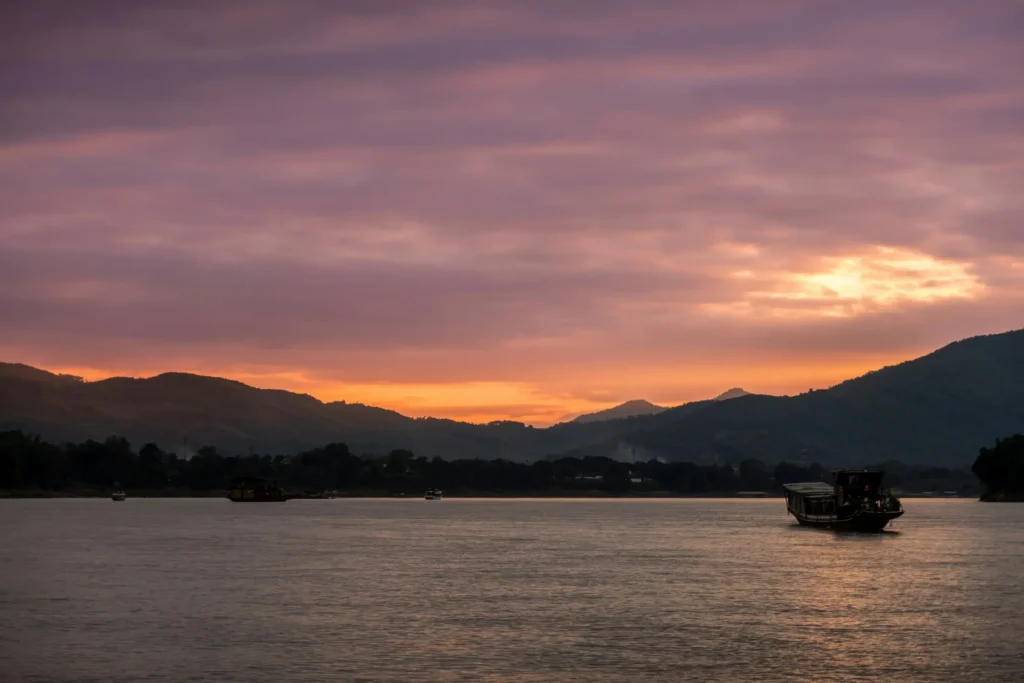
- Sunset views over limestone karsts
- 4,000 Islands archipelago in the south
Waterfalls: Laos features some of Southeast Asia’s most spectacular cascades:
- Kuang Si Falls: turquoise multi-tiered pools near Luang Prabang
- Tad Fane: 120-meter twin waterfalls in Bolaven Plateau
- Tad Yuang: coffee plantation backdrop
- Khone Phapheng: largest in Southeast Asia
Mountains and Jungles:
- 70% forest coverage
- Pristine trekking routes through Nam Ha Protected Area
- Gibbon Experience: jungle canopy treehouse stays
- Dramatic limestone formations in Vang Vieng
Incredible Value
This Laos travel guide emphasizes affordability:
- Budget travelers: $25-35 daily (accommodation, food, local transport)
- Mid-range comfort: $50-75 daily
- Luxury experiences: $100-150 daily
Compare this to $80-120 daily for similar experiences in Thailand or $70-100 in Vietnam.
Adventure Activities Without Crowds
Available Adventures:
- Rock climbing on limestone cliffs (Vang Vieng)
- Caving expeditions (Kong Lor Cave, Tham Kong Lo)
- Kayaking through Nam Song River
- Jungle trekking with overnight homestays
- Ziplining through rainforest canopy
- Motorbiking mountain passes
- Hot air ballooning over karst landscapes
Unlike Thailand’s packed adventure centers, Laos offers similar activities with a fraction of the tourists.
Genuine Local Interaction
Lao people rank among Southeast Asia’s friendliest:
- Children wave enthusiastically at foreigners
- Locals patient with language barriers
- Genuine curiosity about travelers
- Minimal aggressive selling or scamming
- Smiles greet you constantly
This warmth creates memorable connections impossible in more touristed destinations.
Understanding Laos: Essential Background
Geography and Location
Laos is Southeast Asia’s only landlocked country, bordered by:
- Thailand (west): 1,754 km border, main entry point for many travelers
- Vietnam (east): 2,130 km border, mountainous crossing points
- Cambodia (south): 541 km border, 4,000 Islands route popular
- China (north): 423 km border, high-speed rail opening new connections
- Myanmar (northwest): 235 km border, limited crossing options
Terrain: Mountains dominate, with 80% of land above 180 meters elevation. The Mekong River creates a natural western border with Thailand while providing vital transport routes internally.
Climate Zones: Despite small size (similar to United Kingdom), Laos features varied microclimates:
- Northern mountains: cooler, distinct seasons
- Mekong valley: tropical, hot and humid
- Southern lowlands: consistently warm year-round
Brief History Context
Understanding Laos’s history enriches your travels:
Ancient Kingdoms:
- Lan Xang Kingdom (1354-1707): “Kingdom of a Million Elephants”
- Buddhist influence from 8th century onward
- Trading center on regional silk roads
Colonial Period (1893-1953):
- French Indochina inclusion
- Infrastructure development
- Colonial architecture remaining in cities
Modern Struggles:
- Secret War (1964-1973): Most heavily bombed country per capita in history
- Communist revolution (1975)
- Gradual opening to tourism (1990s onward)
UXO Legacy: Unexploded ordnance remains in rural areas. This Laos travel guide emphasizes staying on marked paths outside cities and supporting organizations like COPE that assist bomb victims.
People and Language
Ethnic Composition:
- Lao Loum (lowland Lao): 68%
- Lao Theung (upland groups): 22%
- Lao Soung (highland groups, including Hmong): 9%
Official Language: Lao (closely related to Thai)
English Proficiency:
- Tourist areas: basic English common
- Younger generation: improving proficiency
- Rural areas: very limited English
- Learning basic Lao phrases earns respect and better service
Useful Phrases:
- Hello: Sabaidee (sah-bye-dee)
- Thank you: Khop chai (kop-chai)
- How much?: Thao dai? (tao-dye)
- Delicious: Sep (sep)
- Yes: Jao (jow)
- No: Bo (baw)
Best Time to Visit Laos: Seasonal Guide
Timing significantly impacts your Laos experience. This Laos travel guide breaks down each season:
Cool & Dry Season (November-February): Peak Time ⭐⭐⭐⭐⭐
Why It’s Best:
Weather Conditions:
- Temperatures: 60-85°F (15-30°C)
- Minimal rainfall (1-3 days per month)
- Clear blue skies perfect for photography
- Comfortable hiking and outdoor activities
- Pleasant evenings requiring light layers
Advantages:
- All roads and attractions accessible
- River levels good for boat trips
- Excellent visibility for mountain views
- Waterfalls still flowing from monsoon
- Festivals including Pi Mai Lao (Lao New Year in April)
Drawbacks:
- Highest prices (30-40% premium on accommodation)
- Most tourists, especially December-January
- Book transportation and lodging 3-5 days ahead
- Popular sites more crowded
Who Should Visit:
- First-time travelers wanting guaranteed good weather
- Photographers seeking clear skies
- Trekking enthusiasts
- Anyone with inflexible schedules
Regional Variations:
- Northern Laos: Can be cool (50-60°F) in December-January mornings
- Luang Prabang: Perfect temperatures 65-75°F
- Vientiane: Slightly warmer 70-85°F
- Southern Laos: Consistently warm 75-85°F
Hot Season (March-May): Shoulder Period ⭐⭐⭐
Weather Reality:
Temperature Extremes:
- Daily highs: 90-105°F (32-40°C)
- Oppressive heat by April
- Hazy conditions from slash-and-burn agriculture
- Humidity increasing as monsoon approaches
Advantages:
- 25-35% cheaper accommodation than peak season
- Significantly fewer tourists
- Waterfalls still impressive early in season (March)
- Local festivals and celebrations
- Easier booking without advance reservations
Challenges:
- Outdoor activities exhausting midday
- Reduced visibility from smoke haze (March-April)
- Rivers beginning to lower
- Uncomfortable for extended walking
Strategy for Success:
- Start activities early (6am-10am)
- Take midday siesta (noon-4pm)
- Resume exploring late afternoon (4pm-7pm)
- Seek higher elevations (Pakse plateau, northern mountains)
- Prioritize water-based activities
Who Should Visit:
- Budget travelers accepting heat for savings
- Experienced Southeast Asia travelers
- Those avoiding crowds
- Visitors with flexible daily schedules
Rainy Season (June-October): Low Season ⭐⭐⭐⭐
Weather Patterns:
Rainfall Characteristics:
- Daily afternoon storms (1-3 hours typically)
- Mornings often clear and sunny
- Temperatures moderate: 75-85°F (24-30°C)
- Humidity high (80-90%)
- Roads occasionally impassable in remote areas
Why It’s Underrated:
Visual Beauty:
- Lush, vibrant green landscapes
- Waterfalls at maximum power
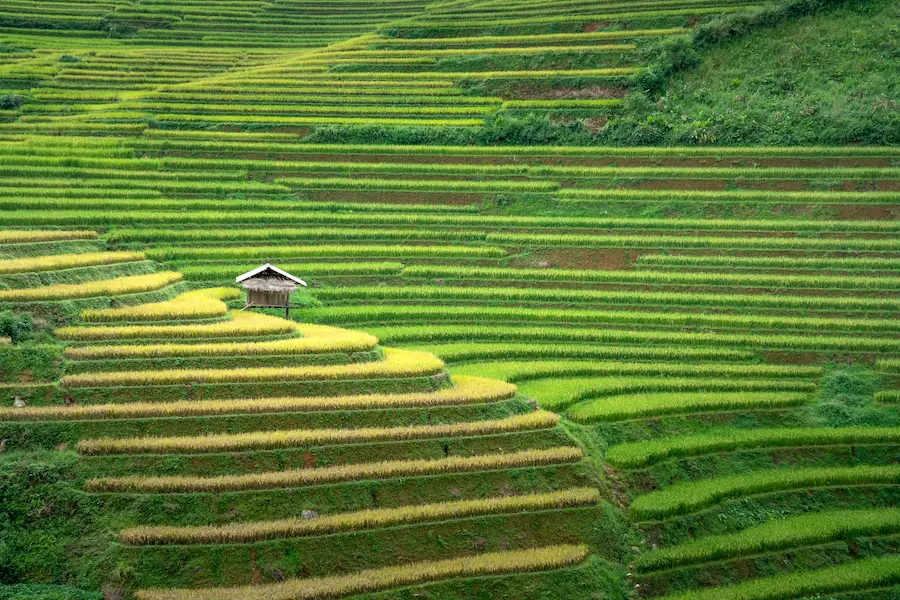
- Rice paddies brilliant green
- Misty mountain mornings
- Dramatic cloud formations
Practical Benefits:
- Lowest prices (40-60% discounts on everything)
- Empty temples and attractions
- Authentic local life (fewer tourist influences)
- Better cultural interactions
- Cool temperatures after afternoon rain
Drawbacks:
- Some remote areas difficult to access
- Occasional flooding in lowland areas
- River boat schedules disrupted
- Need rain gear and waterproof bags
- Trekking can be muddy and leeches present
Smart Wet Season Strategy:
- Plan indoor activities for afternoon (museums, cooking classes, massage)
- Embrace morning temple visits before rain
- Enjoy afternoon storms in cozy cafes
- Book last-minute for best deals
- Focus on accessible areas (Luang Prabang, Vang Vieng, Vientiane)
Who Should Visit:
- Photographers wanting dramatic landscapes
- Budget-conscious travelers
- Those seeking authentic experiences
- Visitors comfortable with weather flexibility
- Long-term travelers (spending weeks in region)
Month-by-Month Quick Reference
Best Overall Months: November, December, January, February Best Value: June, July, August, September Avoid If Weather-Sensitive: April, May (too hot) Photography: November (post-monsoon clarity), September (lush greens)
For comprehensive monthly breakdowns, see our detailed Best Time to Visit Laos guide.

Laos Visa Requirements: Complete Guide
Understanding visa requirements prevents border complications. This Laos travel guide covers all options:
Visa Options for Tourists
1. Visa on Arrival (Most Common)
Eligibility: Most nationalities (150+ countries including US, UK, EU, Canada, Australia)
Process:
- Complete application form on arrival
- Provide passport photo (or pay $2 extra)
- Pay visa fee in USD ($30-42 depending on nationality)
- Processing takes 10-20 minutes
Entry Points:
- Wattay International Airport (Vientiane)
- Luang Prabang International Airport
- Pakse International Airport
- Major land borders (Thai, Vietnamese, Cambodian borders)
Requirements:
- Passport valid 6+ months
- One passport photo
- Cash in USD (exact amount preferred)
- Return/onward ticket (rarely checked but technically required)
Processing Fee: Standard during business hours. Add $1-2 for weekend/holiday arrival, $2 after hours.
2. E-Visa (Convenient Online Option)
Cost: $50 total ($45 visa + $5 processing)
Process:
- Apply online at laosevisa.gov.la (official site)
- Upload passport photo and passport copy
- Pay online via credit card
- Receive approval email (3-5 business days)
- Print approval letter
- Show at immigration (they stamp visa)
Advantages:
- No arrival queues
- Guaranteed approval before travel
- Pay by card (no need for exact USD cash)
Disadvantages:
- More expensive than visa on arrival ($50 vs $30-42)
- Processing time required
- Limited to specific entry points (check website)
When to Use:
- Arriving at smaller airports or land borders without VOA
- Peace of mind wanting pre-approval
- Avoiding arrival queues during peak season
3. Embassy Visa
When Needed:
- Nationalities ineligible for VOA or e-visa
- Extended stays requiring special arrangements
- Business or other visa types
Process: Contact Laos embassy in your country for specific requirements and costs.
Visa Extension
Tourist Visa Extension:
- Available once for additional 30 days
- Process in Vientiane at immigration office
- Cost: approximately $2 per day ($60 for 30 days)
- Bring passport and passport photos
- Processing takes 2-3 business days
Overstay Penalties:
- $10 per day fine
- Maximum 30 days overstay allowed
- Longer overstay can result in ban
Border Crossing Tips
Popular Entry Points:
From Thailand:
- Nong Khai/Vientiane: Friendship Bridge (busiest crossing)
- Chiang Khong/Huay Xai: Northern entry for slow boat
- Mukdahan/Savannakhet: Central crossing
- Nakhon Phanom/Thakhek: Alternative central route
From Vietnam:
- Nam Khan/Nong Haet: Northern crossing to Phonsavan
- Na Meo/Nam Xoi: Northern alternative
- Lao Bao/Dansavanh: Central crossing to Savannakhet
- Bo Y/Nong Nok Khiene: Southern crossing
From Cambodia:
- Veun Kham/Dom Kralor: 4,000 Islands crossing
Border Crossing Strategy:
- Arrive early (borders close 6-8pm typically)
- Carry exact USD for visa
- Have passport photos ready
- Avoid border “helpers” (scammers)
- Check current entry point status online
Laos Travel Costs: Complete Budget Breakdown
Understanding costs helps you budget accurately. This Laos travel guide provides real numbers:
Daily Budget by Travel Style
Budget Backpacker: $25-35 per day
Accommodation: $8-12
- Hostel dorm beds: $5-8
- Basic guesthouses: $10-12
- Fan rooms with shared bathroom
- Clean but minimal amenities
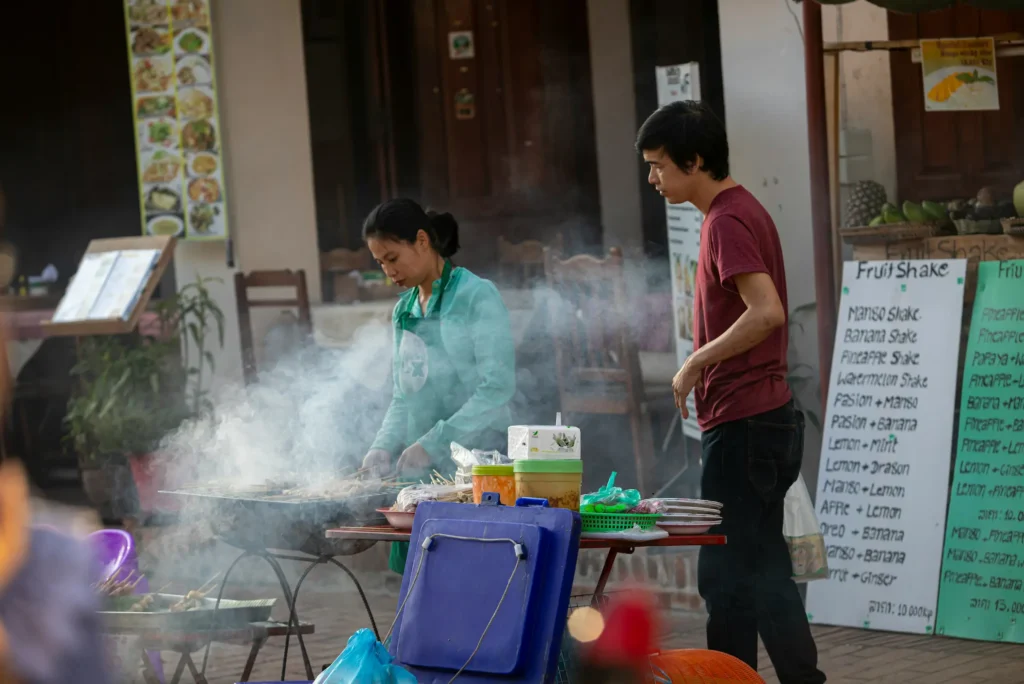
Food: $8-12
- Street food breakfast: $1-2
- Street food lunch: $2-3
- Local restaurant dinner: $3-5
- Snacks and water: $2
Transportation: $3-5
- Local bus rides: $1-2
- Occasional tuk-tuk: $1-3
- Bicycle rental: $2-3
Activities: $5-8
- Mostly free walking and temple exploration
- Occasional paid waterfall entry ($2-3)
- Budget for 1-2 organized tours per week
Mid-Range Traveler: $50-75 per day
Accommodation: $25-40
- Private room with AC: $25-35
- Hot water, Wi-Fi, breakfast included
- Small boutique guesthouses
- Occasionally nice hotels
Food: $15-25
- Mix of street food and sit-down restaurants
- Western breakfast: $4-6
- Lunch at local restaurant: $4-7
- Nice dinner: $8-12
- Drinks and dessert: $3-5
Transportation: $10-15
- Comfortable tourist buses between cities
- Regular tuk-tuks within cities
- Occasional private transport
- Minivan over regular bus
Activities: $15-25
- Regular paid attractions and tours
- Cooking classes
- Organized day trips
- Waterfall entrances and national parks
Comfort Traveler: $100-150+ per day
Accommodation: $60-120
- Boutique hotels and resorts: $60-100
- Luxury properties: $100-200+
- Swimming pools and spas
- River views and premium locations
- Full-service amenities
Food: $30-50
- Upscale restaurants: $15-25 per meal
- Hotel dining and international cuisine
- Premium beverages
- Special dining experiences
Transportation: $20-40
- Private cars and drivers
- Domestic flights (skip long bus rides)
- Premium tuk-tuks
- Comfortable minivans
Activities: $30-60
- Private tours and guides
- Premium experiences (Gibbon Experience: $180-350)
- Spa treatments
- All paid attractions
Specific Costs
Accommodation Examples:
Budget ($8-15/night):
- Vientiane: $10-12 guesthouse
- Luang Prabang: $12-15 hostel
- Vang Vieng: $8-10 basic room
- 4,000 Islands: $8-12 bungalow
Mid-Range ($25-45/night):
- Vientiane: $30-40 hotel
- Luang Prabang: $35-45 boutique guesthouse
- Vang Vieng: $25-35 riverside hotel
- 4,000 Islands: $30-40 upgraded bungalow
Food Costs:
Street Food:
- Khao piak sen (noodle soup): $1.50-2
- Baguette sandwich: $1-1.50
- Sticky rice: $0.50-1
- Papaya salad: $1-2
- Fresh fruit shake: $1-1.50
- BBQ skewers: $0.50-1 each
Restaurants:
- Local restaurant meal: $3-6
- Western-style cafe meal: $5-8
- Nice restaurant dinner: $8-15
- Riverside restaurant with view: $10-18
Drinks:
- Beer Lao (large): $1-1.50 (local shop), $2-3 (restaurant)
- Coffee: $1-2
- Fresh juice: $1.50-2.50
- Cocktails: $3-5
Transportation Costs:
Between Cities:
- Vientiane to Vang Vieng: $8-12 (bus, 3-4 hours)
- Vang Vieng to Luang Prabang: $10-15 (bus, 5-6 hours)
- Luang Prabang to Pakse: $25-35 (sleeper bus, 18-20 hours)
- Luang Prabang to Pakse: $80-120 (flight, 1.5 hours)
- Slow boat (Thai border to Luang Prabang): $35-50 (2 days)
Within Cities:
- Tuk-tuk short ride: $1-2
- Tuk-tuk full day: $20-30
- Motorbike rental: $8-15 per day
- Bicycle rental: $2-5 per day
Activity Costs:
Free Activities:
- Temple exploration (most temples free)
- Walking Luang Prabang Old Town
- Sunset watching along Mekong
- Local markets
- Alms-giving ceremony (observe)
Budget Activities ($2-10):
- Waterfall entrances: $2-5
- Museum entries: $2-5
- Temple donations: $1-2
- Short boat rides: $3-8
Mid-Range Activities ($15-50):
- Kuang Si Falls day trip: $8-15
- Cooking class: $25-35
- Trekking day trip: $30-50
- Kayaking half day: $20-30
- Cave tours: $15-25
Premium Experiences ($50+):
- Gibbon Experience (3-day): $180-350
- Hot air balloon ride: $90-130
- Multi-day trekking with homestay: $70-150
- Private guided tours: $60-100+ per day
Money-Saving Tips
Accommodation:
- Book last-minute during low season (walk-in rates better)
- Stay slightly outside tourist centers (30-40% cheaper)
- Negotiate for longer stays (weekly/monthly rates)
- Share rooms or book dorms
Food:
- Eat exclusively local food (save $10-15 daily)
- Buy from markets for snacks
- Fill water bottles (many places offer free filtered water)
- Skip alcohol (Beer Lao adds up at $3-5 per bottle in tourist areas)
Transportation:
- Take local buses over tourist buses (save 30-50%)
- Rent bicycles instead of tuk-tuks
- Book overnight buses (save accommodation cost)
- Share tuk-tuks with other travelers
Activities:
- Focus on free temple exploration
- Self-guide to waterfalls (rent motorbike)
- Join free walking tours
- Combine with other travelers for group rates
Getting Around Laos: Transportation Guide
Transportation in Laos requires patience. This Laos travel guide helps you navigate efficiently:
Between Cities: Long-Distance Travel
Buses (Most Common)
Types:
- Local buses: Cheapest, very basic, crowded, frequent stops
- VIP buses: Reclining seats, AC, bathroom, snacks included
- Sleeper buses: Overnight journeys, bed-style seating, varying quality
Major Routes:
- Vientiane to Vang Vieng: 3-4 hours, $8-12
- Vang Vieng to Luang Prabang: 5-6 hours, $10-15
- Luang Prabang to Pakse: 18-20 hours, $25-35 (sleeper)
- Vientiane to Pakse: 10-12 hours, $18-25
Booking:
- Buy tickets through guesthouses (small commission but convenient)
- Book at bus stations directly (slightly cheaper)
- Online booking possible for some routes
- Book 1-2 days ahead during peak season
Tips:
- Bring warm layers (AC often freezing)
- Carry snacks and water
- Expect delays (1-2 hours common)
- Download entertainment offline
- Use bathroom before boarding
Minivans
Characteristics:
- Faster than buses
- Cramped seating (designed for smaller frames)
- Less comfortable for long journeys
- Good for shorter routes (2-4 hours)
Best Routes:
- Vientiane to Vang Vieng
- Luang Prabang to Nong Khiaw
- Short connections between nearby towns
Cost: Similar to VIP buses, sometimes slightly more
Domestic Flights
Airlines:
- Lao Airlines (national carrier, most routes)
- Lao Skyway (limited routes)
Main Routes:
- Vientiane to Luang Prabang: 45 minutes, $80-120
- Vientiane to Pakse: 1.5 hours, $90-140
- Luang Prabang to Pakse: 1.5 hours, $100-150
When Worth It:
- Saving 16+ hours on Luang Prabang to Pakse route
- Limited time schedules
- Overnight bus avoidance
- Splurge for comfort
Booking:
- Book 2-4 weeks ahead for best prices
- Prices don’t vary dramatically
- Direct with airlines or through booking sites
- Check baggage allowances (often limited)
Slow Boat (Mekong River)
Classic Route: Thailand border (Huay Xai) to Luang Prabang: 2 days
Experience:
- Scenic mountains and river views
- Overnight stop in Pakbeng (basic guesthouses)
- Wooden benches (bring cushion)
- Cramped but memorable
- Sunset and sunrise over Mekong
Cost: $35-50 total (including Pakbeng accommodation)
Tips:
- Arrive early for better seats (cushioned benches)
- Bring snacks, water, and entertainment
- Cushion or sleeping bag for sitting
- Sun protection (intense reflection off water)
- Prepare for basic facilities
Who Should Do It:
- Travelers valuing journey over destination
- Budget backpackers
- Photographers
- Those entering Laos from northern Thailand
Within Cities: Local Transportation
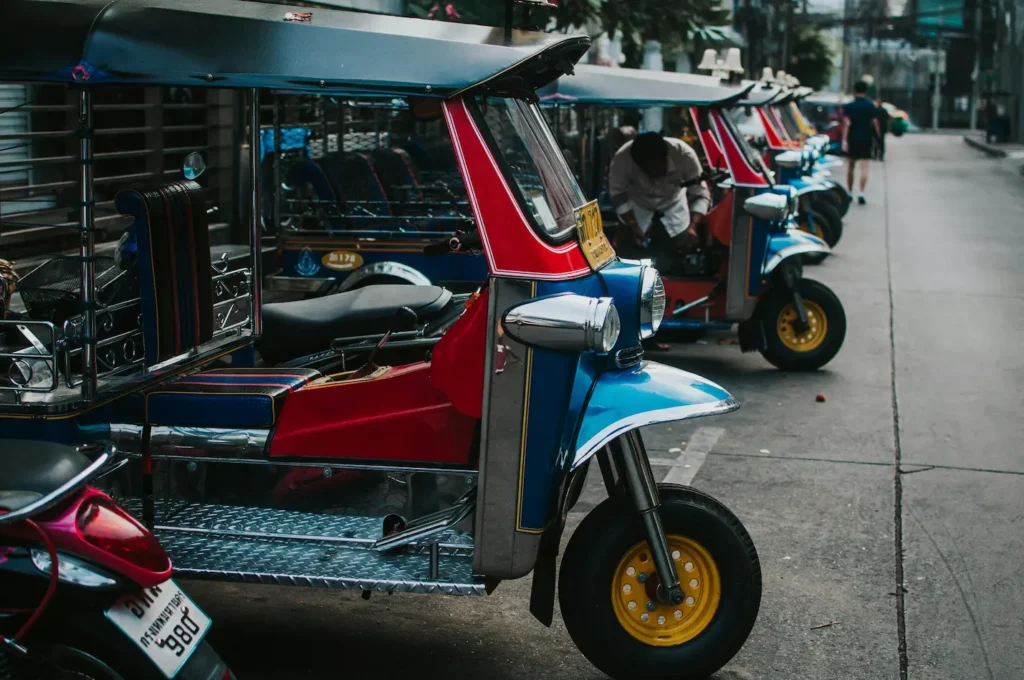
Tuk-Tuks
How They Work:
- Negotiate price BEFORE entering
- Fixed rates to popular destinations
- Full-day hire available
- Shared rides possible
Typical Costs:
- Short ride (1-2km): $1-2
- Medium ride (3-5km): $2-4
- Full day: $20-30
- To/from bus station: $3-5
Negotiation:
- Ask locals for fair prices first
- Start at 50-60% of quoted price
- Walk away if too high (they’ll usually call you back)
- Split costs with other travelers
Motorbike Rentals
Requirements:
- International Driving Permit (technically required, often not checked)
- Passport (left as deposit at some places)
- Experience riding motorbikes
Costs:
- Semi-automatic: $8-12 per day
- Full automatic: $10-15 per day
- Weekly rates: $50-80
- Monthly rates: $150-250
Safety:
- Wear helmet (often included)
- Drive slowly on unfamiliar roads
- Watch for potholes and unpredictable drivers
- Avoid night driving in rural areas
- Check brakes and lights before renting
Best Places for Motorbike Exploration:
- Vang Vieng (limestone scenery, lagoons)
- Luang Prabang (waterfalls, countryside)
- Pakse (Bolaven Plateau loop)
- 4,000 Islands (flat, easy riding)
Bicycle Rentals
Ideal For:
- Flat cities (Vientiane, Luang Prabang old town)
- Short distances (2-5km)
- Leisurely exploration
- Budget travelers
Cost: $2-5 per day
Best Cities:
- Vientiane (relatively flat)
- Luang Prabang (old town area)
- 4,000 Islands (Don Det, Don Khon)
- Vang Vieng (town area, some countryside)
Walking
Most Walkable Places:
- Luang Prabang Old Town (compact, pedestrian-friendly)
- Vang Vieng town center
- 4,000 Islands villages
- Vientiane riverside area
Tips:
- Start early to avoid midday heat
- Bring water and sun protection
- Comfortable shoes essential
- Maps.me app excellent for navigation
Transportation Planning Tips
General Strategy:
- Build buffer time for delays
- Book overnight transport to save accommodation
- Confirm departure times day before
- Arrive at stations 30 minutes early
- Download offline maps and entertainment
- Bring snacks and water
- Dress in layers (AC varies wildly)
Safety Considerations:
- Use reputable bus companies (ask guesthouse recommendations)
- Avoid night travel in remote areas
- Secure belongings on buses
- Motorbike safety gear essential
- Check vehicle condition before renting
Top Destinations in Laos: Where to Go
This Laos travel guide covers must-visit destinations:
Luang Prabang: UNESCO Heritage Jewel
Why Visit: Luang Prabang represents the heart of Lao culture. Ancient temples, French colonial architecture, and riverside charm create an atmosphere found nowhere else in Southeast Asia.
Essential Experiences:
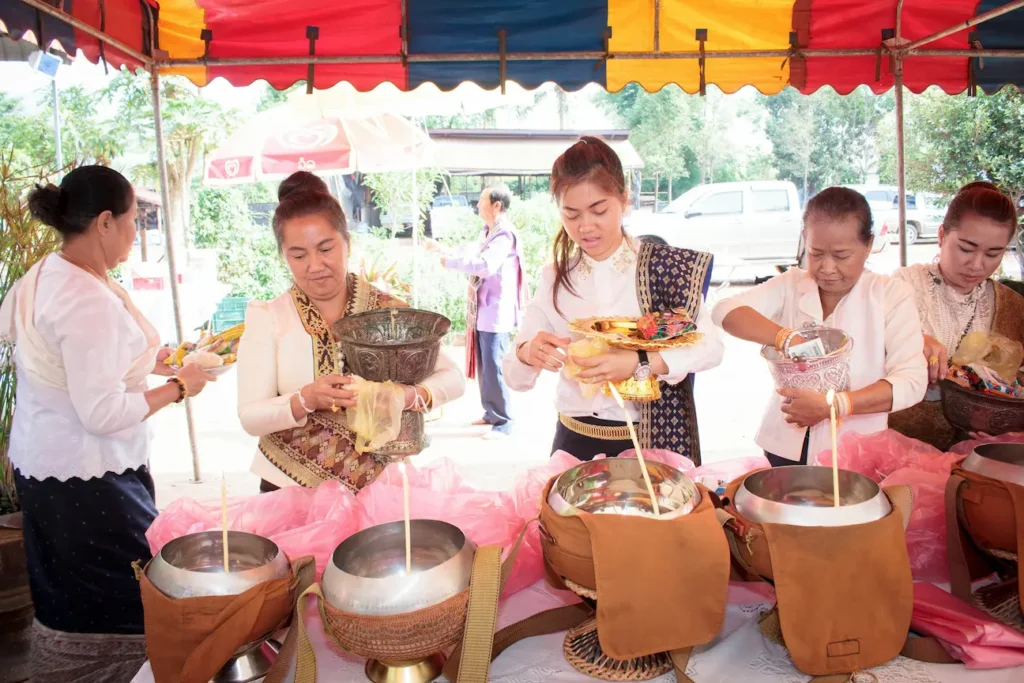
Alms-Giving Ceremony:
- Daily at dawn (5:30-6:30am)
- Buddhist monks collect offerings from locals
- Observe respectfully (don’t interfere or touch monks)
- Participate only if genuinely interested (buy sticky rice from vendors)
- Silent ceremony representing spiritual devotion
Temples:
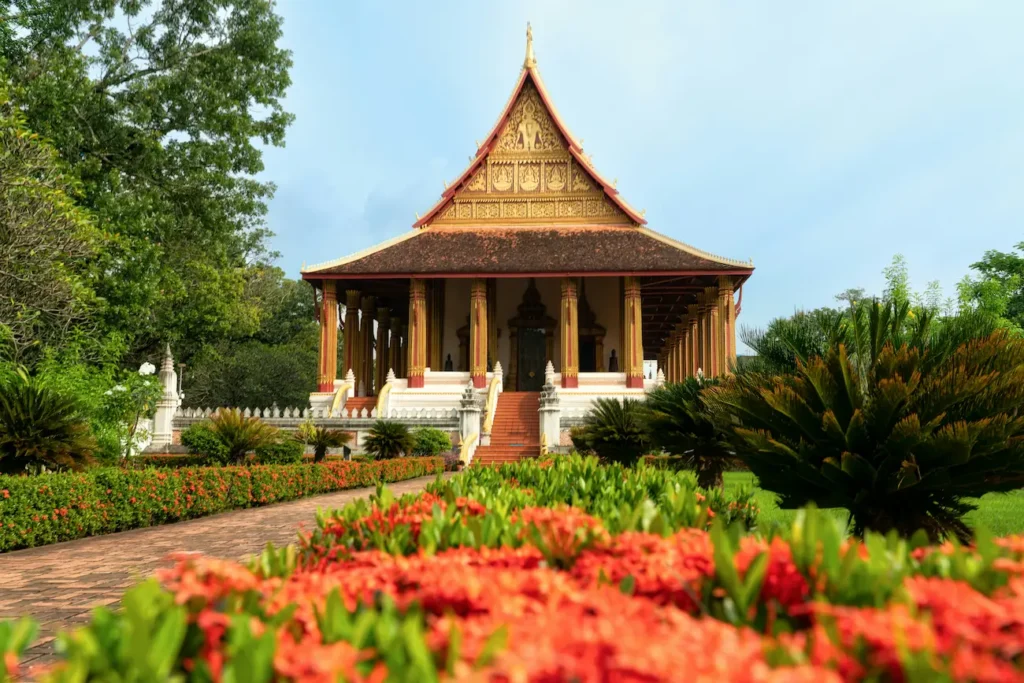
- Wat Xieng Thong: Luang Prabang’s most beautiful temple, riverside location
- Wat Mai: Golden facade, intricate carvings
- Wat Phra Mahathat: Climbing Phousi Hill reward
- Wat Visoun: Oldest operating temple (1513)
Kuang Si Falls:
- 29km from town (organize tour or rent motorbike)
- Multi-tiered turquoise pools
- Swimming allowed in most pools
- Arrive early (8-9am) to beat crowds
- Bear rescue center at entrance
- Cost: $3 entrance
Activities:
- Night market (handicrafts, textiles, souvenirs)
- Cooking classes: $25-35 per person
- Traditional massage: $8-15 per hour
- Mekong River sunset cruises: $10-20
- Weaving and handicraft village visits
- Food tours through local markets
Recommended Stay: 3-4 days
Where to Stay:
- Old Town: Most atmosphere, walkable to everything ($30-80)
- Across river: Quieter, better
Where to Stay:
- Old Town: Most atmosphere, walkable to everything ($30-80/night)
- Across river: Quieter, better value, 5-minute boat ride ($20-50/night)
- Riverside: Best views, premium pricing ($60-120/night)
Vang Vieng: Adventure Capital
Transformation Story: Once notorious for dangerous tubing parties, Vang Vieng has reinvented itself as an adventure destination attracting outdoor enthusiasts over party backpackers.
Adventure Activities:
Rock Climbing:
- 100+ bolted routes
- Limestone cliffs surrounding town
- Grades from beginner to advanced
- Guided climbing tours: $35-50 per day
- Multi-pitch routes for experienced climbers
Caving:
- Tham Phu Kham (Blue Lagoon Cave): $3 entrance, reclining Buddha inside
- Tham Jang (cave used as fortress): $2 entrance, panoramic views
- Tham Nam (Water Cave): $3, tubing through underground river
- Guided multi-cave tours: $20-35
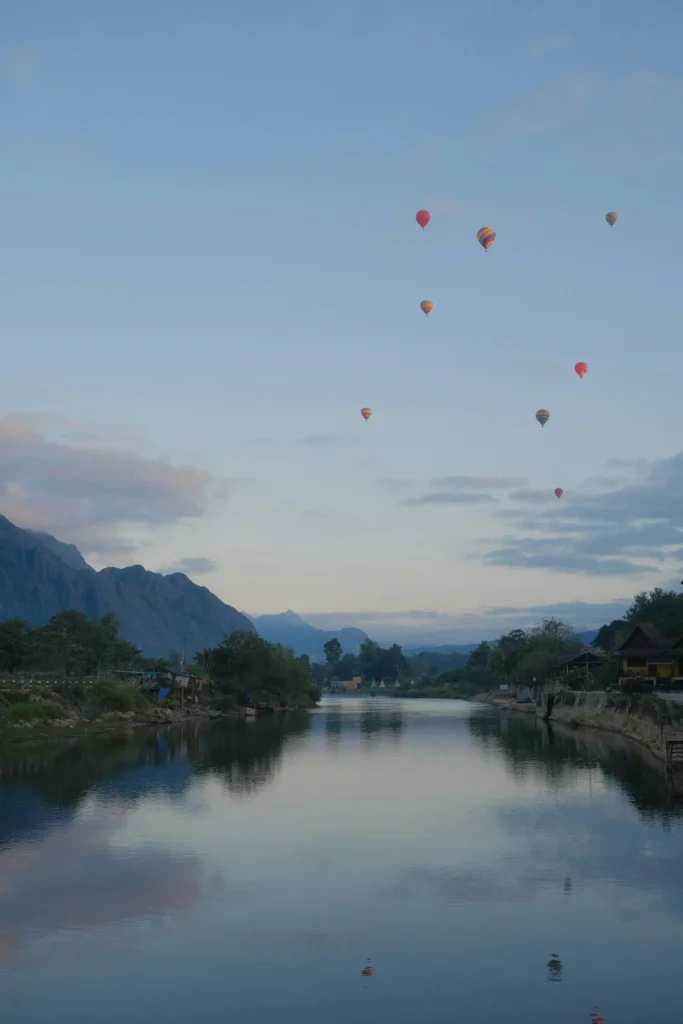
Hot Air Ballooning:
- Sunrise flights over karst landscape
- 30-minute flights: $90-130 per person
- Book 2-3 days ahead
- Weather dependent (November-March best)
Kayaking:
- Nam Song River day trips
- Half-day: $20-30
- Full day with caving: $35-50
- Peaceful scenery alternative to tubing
Tubing:
- Calmer than past reputation
- Float down Nam Song River (3-4 hours)
- Cost: $6-8 including tuk-tuk back
- Stops at riverside bars
- Safety improved significantly
Other Activities:
- Ziplining and rope courses
- Motorbiking countryside loops
- Lagoon swimming (multiple blue lagoons)
- Viewpoint hikes (sunrise/sunset)
- Cycling through rice paddies
Recommended Stay: 3-4 days
Where to Stay:
- Town center: Walking distance to everything ($15-40/night)
- Riverside: Beautiful views, peaceful ($25-60/night)
- Budget hostels: Social atmosphere ($8-20/night)
Vientiane: Laid-Back Capital
What Makes It Unique: Vientiane might be Southeast Asia’s most relaxed capital. No skyscrapers, minimal traffic, and riverside cafes define this small city feeling more like a large town.
Key Attractions:
Pha That Luang:
- National symbol of Laos
- Golden stupa visible across city
- Built 16th century
- Religious significance
- Entry: $1-2
Patuxai Monument:
- Lao Arc de Triomphe
- Climb to top for city views
- Built 1960s
- Beautiful ceiling decorations
- Entry: $1
Buddha Park (Xieng Khuan):
- Bizarre sculpture garden 25km from city
- 200+ Hindu and Buddhist statues
- Quirky photo opportunities
- 3-story structure with views
- Entry: $1, transport $10-15
COPE Visitor Centre:
- FREE, essential visit
- UXO (unexploded ordnance) education
- Bomb victims’ stories
- Supports rehabilitation
- Powerful and informative
Activities:
- Riverside walking/cycling promenade
- Night markets (clothing, souvenirs)
- Talat Sao (Morning Market) shopping
- Food tours and cooking classes
- Traditional massage and spas
Recommended Stay: 1-2 days (or longer for visa extensions)
Strategic Use: Vientiane works as entry/exit point, visa extension location, or rest day between destinations rather than main attraction.
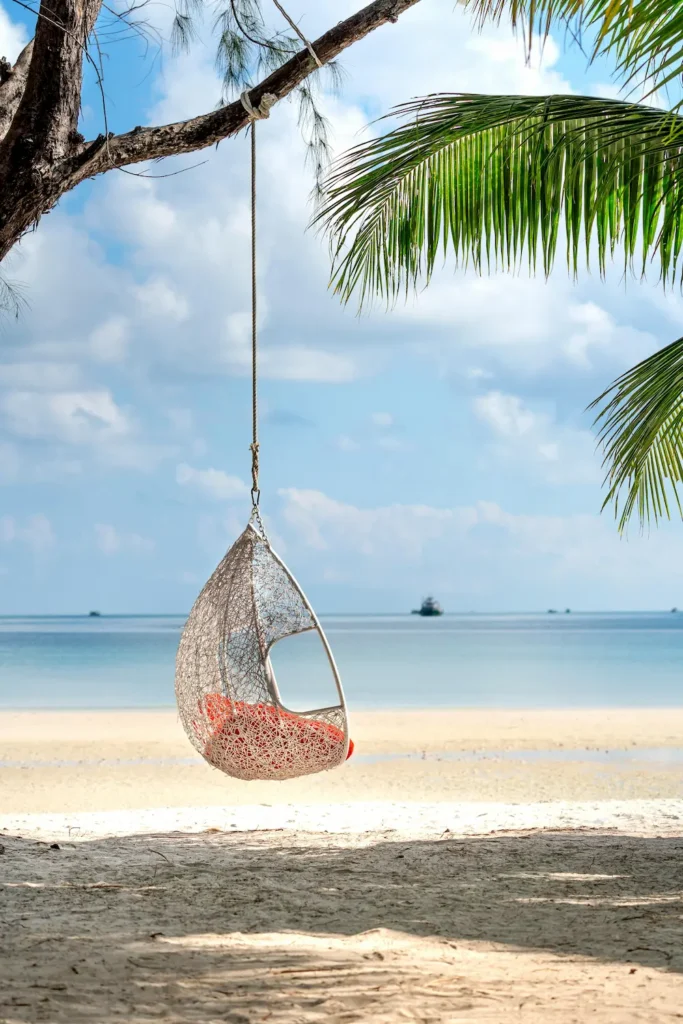
4,000 Islands (Si Phan Don): Ultimate Relaxation
The Setting: During dry season, Mekong River widens creating 4,000+ islands—locals claim exact number changes yearly. Three main islands welcome tourists: Don Det, Don Khon, and Don Khong.
Don Det: Backpacker Hub
Atmosphere:
- Social, relaxed vibe
- Basic bungalows over water
- Restaurants and bars
- Younger crowd
- Easy island connections
Activities:
- Hammock time (primary activity)
- Kayaking between islands
- Cycling Don Khon via bridge
- Sunset watching
- Fire poi shows (evening entertainment)
Cost: Most budget-friendly island
Don Khon: Quieter Alternative
Characteristics:
- More peaceful than Don Det
- Better maintained paths
- Slightly upscale accommodations
- Connected to Don Det via bridge
- Older travelers and couples
Attractions:
- Li Phi Falls (impressive rapids)
- Colonial-era French railway
- Traditional villages
- Better swimming spots
Cost: 20-30% more than Don Det
Don Khong: Largest Island
Profile:
- Least touristy
- Local life dominates
- Wider range of services
- Motorbike exploration
- Peaceful towns
Best For: Travelers seeking authentic experience over social scene
Area-Wide Activities:
Dolphin Watching:
- Irrawaddy dolphins (endangered)
- Early morning trips best
- Cost: $8-12 per person
- Sighting probability: 60-80%
- Support conservation efforts
Khone Phapheng Falls:
- Largest waterfall in Southeast Asia by volume
- 21 meters high, 10km wide during wet season
- Located on Don Khong
- Entry: $5
- Impressive power display
Recommended Stay: 3-5 days (easy to extend—it’s that relaxing)
Access:
- Bus from Pakse: 3-4 hours, $8-12
- Boat from Don Khong or Don Det
Pakse & Bolaven Plateau: Coffee & Waterfalls
Pakse:
- Southern hub city
- Gateway to Bolaven Plateau
- Wat Phou temple ruins (UNESCO site)
- Decent food scene
- Stay: 1-2 nights as base
Bolaven Plateau Loop:
What Makes It Special:
- Highland region (1000m+ elevation)
- Cooler temperatures
- Coffee plantations (Lao coffee is excellent)
- Stunning waterfalls
- Ethnic minority villages
- Perfect motorbiking route
Highlight Waterfalls:
- Tad Fane: Twin 120-meter cascades, dramatic viewpoint
- Tad Yuang: Powerful single drop, swimming possible
- Tad Lo: Smaller, swimmable, nearby accommodations
- Tad Tayicseua: Widest, impressive during wet season
Coffee Tours:
- Visit working plantations
- Learn processing methods
- Taste fresh Lao coffee
- Purchase beans
- Cost: Often free or $5-10
Motorbiking the Loop:
- 2-3 days ideal
- Well-marked route
- 200-300km total
- Guesthouses throughout
- Potholes but manageable
Recommended Time: 2-3 days
Best Season: November-February (perfect weather, waterfalls still flowing)
Off-the-Beaten-Path Destinations
Nong Khiaw:
- Northern riverside town
- Stunning mountain scenery
- Viewpoint hikes (100 Waterfalls Trek, Phadeng Peak)
- Kayaking Nam Ou River
- 2-3 days recommended
Phonsavan & Plain of Jars:
- Mysterious ancient jars scattered across landscape
- UXO history site
- Cool highland climate
- 1-2 days sufficient
Luang Namtha:
- Northern trekking hub
- Nam Ha National Protected Area
- Multi-day jungle treks with homestays
- Ethnic minority encounters
- 2-4 days
Sample Laos Itineraries
This Laos travel guide provides proven routes:
7-Day Laos Highlights
Day 1-3: Luang Prabang
- Arrive and explore Old Town
- Alms-giving ceremony at sunrise
- Temple visits (Wat Xieng Thong, Wat Mai)
- Kuang Si Falls day trip
- Night market and riverside dining
Day 4-5: Vang Vieng
- Bus from Luang Prabang (5-6 hours)
- Rock climbing or caving
- Blue Lagoon visit
- Hot air balloon (optional)
- Kayaking or tubing
Day 6-7: Vientiane
- Bus from Vang Vieng (3-4 hours)
- Pha That Luang
- Buddha Park
- COPE Centre
- Riverside sunset
- Depart from Vientiane
Who It’s For: First-time visitors with limited time
10-Day Laos Adventure
Day 1-3: Luang Prabang (as above)
Day 4-5: Nong Khiaw
- Bus/minivan (3-4 hours)
- Viewpoint hikes
- Kayaking
- Village visits
Day 6-7: Vang Vieng
- Bus (6-7 hours via Luang Prabang or direct)
- Adventure activities
- Countryside exploration
Day 8: Vientiane
- Quick city tour
- Overnight bus to Pakse
Day 9-10: 4,000 Islands
- Arrive morning from Pakse
- Island relaxation
- Dolphin watching
- Sunset viewing
- Depart for Cambodia or return north
Who It’s For: Balanced mix of culture, adventure, and relaxation
14-Day Complete Laos
Day 1-4: Luang Prabang
- Extended exploration
- Multiple waterfall visits
- Countryside bike tours
- Cooking class
Day 5-6: Nong Khiaw
- Trekking
- Photography
- River activities
Day 7-9: Vang Vieng
- All adventure activities
- Sunrise balloon ride
- Multi-cave exploration
- Motorbiking loops
Day 10: Vientiane
- City sights
- Overnight bus to Pakse
Day 11-12: Bolaven Plateau
- Coffee plantation loop
- Multiple waterfalls
- Highland villages
- Motorbiking adventure
Day 13-14: 4,000 Islands
- Beach and hammock time
- Dolphin watching
- Khone Phapheng Falls
- Complete relaxation
Who It’s For: Comprehensive Laos experience without rushing
Alternative 14-Day Northern Focus: Replace Pakse/Bolaven/4000 Islands with:
- Luang Namtha (3 days): jungle trekking
- Muang Sing (2 days): border town, tribal markets
- Slow boat journey (2 days): scenic travel

Food & Drink in Laos
[Suggested Image Position: Food section] Image: Traditional Lao food spread with sticky rice, laap, and papaya salad Source: Search “Lao food laap” on Pexels URL Example: https://www.pexels.com/search/lao%20food/
This Laos travel guide covers culinary essentials:
Must-Try Lao Dishes
Laap (Larb): National Dish
- Minced meat salad (chicken, pork, beef, fish, or duck)
- Fresh herbs (mint, cilantro)
- Lime juice, fish sauce, roasted rice powder
- Served with sticky rice
- Can be raw or cooked (specify if prefer cooked)
- Cost: $2-4
Khao Niao: Sticky Rice
- Accompanies every meal
- Steamed in bamboo baskets
- Eaten with hands (roll into ball, dip in dishes)
- Cultural significance (Lao people call themselves “children of sticky rice”)
- Cost: $0.50-1 per basket
Tam Mak Hoong: Papaya Salad
- Green papaya shredded
- Chilies, tomatoes, lime, fish sauce
- Often includes fermented crab or fish (pungent)
- Specify spice level (“baw phet” = not spicy)
- Cost: $1-2
Khao Piak Sen: Noodle Soup
- Rice noodles in rich broth
- Chicken or pork
- Fresh herbs and lime
- Breakfast staple
- Cost: $1.50-2.50
Or Lam: Traditional Stew
- Vegetables and meat
- Distinctive bitter flavors from local plants
- Wood ear mushrooms, eggplant, chilies
- Fragrant and hearty
- Cost: $3-5
Mok Pa: Steamed Fish
- Fish wrapped in banana leaves
- Herbs and spices
- Steamed until tender
- Aromatic and flavorful
- Cost: $4-7
Street Food Guide
Best Street Foods:
- Ping kai (grilled chicken): $2-3
- Sai oua (Lao sausage): $1-2
- Khao jee (baguette sandwiches): $1-1.50
- Kai yang (grilled chicken): $2-4
- Fresh fruit (mango, papaya, dragon fruit): $1-2
- Khanom (sweet snacks): $0.50-1
Where to Find:
- Morning markets (6-9am)
- Night markets (5-10pm)
- Roadside vendors throughout day
- Near bus stations and markets
Safety Tips:
- Eat where locals eat (high turnover = fresh)
- Avoid raw vegetables in rural areas
- Choose cooked-to-order items
- Bring hand sanitizer
- Start with less spicy, increase tolerance
Beverages
Beer Lao:
- National beer, light lager
- Local shop: $1-1.50
- Restaurant: $2-3
- Dark version available (seasonal)
- Pride of Laos
Lao Coffee:
- Strong, rich flavor
- Grown in Bolaven Plateau
- Served with sweetened condensed milk
- Iced or hot
- Cost: $1-2
Fresh Juices & Shakes:
- Sugarcane juice: $0.50-1
- Fruit shakes: $1-1.50
- Coconut water: $1-1.50
- Herbal drinks: $0.50-1
Lao-Lao:
- Local rice whiskey
- Powerful (often 40-50% alcohol)
- Sometimes infused with scorpions/snakes
- Sip cautiously
- Cost: $2-5 per bottle
Dining Etiquette
Cultural Norms:
- Meals shared family-style
- Sticky rice eaten with hands
- Other dishes use fork and spoon (fork guides, spoon eats)
- Leave small amount on plate (shows you’re satisfied)
- Try everything offered (respectful)
Useful Phrases:
- Delicious: Sep (sep)
- Not spicy: Baw phet (bow pet)
- Vegetarian: Mang sa lat (mung sa laht)
- Bill please: Kep ngern (kep ngen)
Cooking Classes
Available In:
- Luang Prabang: $25-35 per person
- Vientiane: $25-30
- Vang Vieng: $20-28
What You Learn:
- Market tour and ingredient selection
- 3-5 traditional dishes
- Cultural context and techniques
- Recipe cards to take home
- Lunch or dinner included
Worth It: Excellent cultural experience and practical skills
Practical Travel Tips
Cultural Etiquette
Temple Behavior:
Dress Code:
- Cover shoulders and knees
- Remove shoes before entering buildings
- No revealing clothing
- Scarves available if needed
Conduct:
- Speak quietly
- Don’t point feet at Buddha images
- Don’t touch religious artifacts
- Sit properly (legs to side, not crossed toward Buddha)
- Photography usually allowed (ask if unsure)
Monk Interaction:
- Women NEVER touch monks or hand items directly
- Men can speak with monks (many practice English)
- Sit lower than monks
- Respectful distance maintained
- Photos okay if monk approves
General Social Customs:
Do:
- Remove shoes when entering homes
- Use right hand for giving/receiving
- Dress modestly outside beach/tourist areas
- Greet with “Sabaidee” and smile
- Show respect to elders
- Accept hospitality graciously
Don’t:
- Touch people’s heads (most sacred body part)
- Point feet at people
- Raise voice or show anger publicly (loss of face)
- Criticize government or politics
- Public displays of affection (holding hands okay, kissing not)
- Step over people or belongings
Lao Concept of “Face”:
- Maintaining dignity crucial
- Losing temper causes you to lose face
- Patient, calm approach always better
- Smile defuses tension
- Compromise preferred over confrontation
Safety & Health
General Safety:
Laos is very safe with low crime rates. Main concerns:
Common Issues:
- Petty theft in tourist areas (watch bags)
- Motorbike accidents (roads dangerous)
- Scams (rare but increasing in tourist spots)
Staying Safe:
- Watch belongings on buses
- Use guestehouse safes for valuables
- Avoid walking alone late at night in remote areas
- Don’t leave items unattended at restaurants
- Be cautious accepting drinks from strangers
UXO Awareness:
Laos remains most heavily bombed country per capita (Secret War legacy):
- NEVER touch metal objects in countryside
- Stick to marked paths
- Don’t wander into fields/jungle
- Heed warning signs
- Support COPE and MAG (mine action groups)
Health Considerations:
Water:
- Never drink tap water
- Brush teeth with bottled water
- Ice okay in tourist areas (made from purified water)
- Carry purification tablets for remote areas
Food Safety:
- Generally safe if following basic precautions
- Avoid raw vegetables in rural areas
- Ensure meat thoroughly cooked
- Peel fruits yourself
Mosquitoes:
- Malaria risk in rural/jungle areas
- Dengue risk nationwide, especially wet season
- Use 30%+ DEET repellent
- Wear long sleeves/pants at dawn/dusk
- Sleep under mosquito nets in basic accommodations
- Consider malaria prophylaxis for jungle trekking
Common Ailments:
- Traveler’s diarrhea (Imodium, rehydration salts)
- Heat exhaustion (stay hydrated, rest midday)
- Cuts/scrapes (clean thoroughly, antiseptic cream)
- Sunburn (high-SPF sunscreen essential)
Medical Care:
- Basic clinics in cities and tourist towns
- Limited facilities in rural areas
- Serious cases evacuate to Thailand
- Travel insurance with evacuation coverage essential
- Pharmacies stock basic medications
Packing Essentials
Clothing:
- Lightweight, breathable fabrics (cotton, linen)
- Long pants/skirts for temples (3-4)
- T-shirts and tank tops (5-7)
- Light jacket or sweater (northern areas, buses)
- Comfortable walking shoes
- Sandals/flip-flops
- Swimwear
- Rain jacket or poncho (wet season)
Toiletries:
- Sunscreen (SPF 50+, expensive in Laos)
- Insect repellent (DEET 30%+)
- Basic first aid kit
- Prescription medications (in original containers)
- Hand sanitizer
- Wet wipes/tissues
- Biodegradable soap/shampoo
Electronics:
- Universal adapter (Type A, B, C, E, F plugs)
- Power bank (charging opportunities limited)
- Headlamp or flashlight
- Waterproof phone case/dry bag
Documents:
- Passport (6+ months validity)
- Passport photos (2-3 for visa)
- Travel insurance details
- Vaccination records
- Offline maps (Maps.me app)
- Photocopies of important documents
Money:
- USD cash (for visa, emergencies)
- ATM card (notify bank of travel)
- Credit card (limited acceptance)
- Money belt or hidden pouch
Internet & Communication
SIM Cards:
Providers:
- Unitel: Best coverage, $8-12 for tourist package
- ETL (Lao Telecom): $8-10 for 5-7GB
- Beeline: Cheapest, $5-8 but spottier coverage
Purchase:
- Airport upon arrival
- Mobile shops in cities
- Guesthouses (small markup)
- Bring passport for registration
Coverage:
- Good in cities and tourist areas
- Spotty in mountains and remote regions
- 3G/4G available in major destinations
- Mekong islands often limited
Wi-Fi:
- Available in virtually all accommodations
- Cafes and restaurants in tourist areas
- Speed adequate for messaging and browsing
- Video calls can be slow
- Use VPN for sensitive transactions
Apps to Download:
Essential:
- Maps.me (offline maps, essential)
- Google Translate (offline Lao)
- XE Currency (converter)
- Grab (ride-hailing, limited to Vientiane)
Useful:
- TripAdvisor or Google Maps (reviews, hours)
- WhatsApp (communication)
- Dropbox/Google Drive (document backup)
Money Matters
Currency:
- Lao Kip (LAK)
- Approximately 20,000 kip = $1 USD (rates fluctuate)
- Denominations: 1000, 2000, 5000, 10,000, 20,000, 50,000, 100,000 kip notes
Using Money:
ATMs:
- Available in cities and tourist towns
- Withdrawal fees: $3-5 per transaction
- Daily limits: usually 2,000,000-3,000,000 kip
- Dispense Lao kip only
- BCEL and JDB banks most reliable
- Rare in remote areas (withdraw in cities)
Cash:
- Bring USD for visa and emergencies
- Kip preferred for daily transactions
- Small bills useful (10,000, 20,000 kip)
- USD accepted at some hotels/tour operators
- Exchange at banks or exchange booths (better rates than hotels)
Credit Cards:
- Limited acceptance outside cities
- Hotels and upscale restaurants accept
- 3% transaction fee common
- Notify bank before travel
- Keep as backup only
Budgeting Strategy:
- Withdraw larger amounts to minimize fees
- Keep emergency cash separate
- Track spending (easy to overspend when converting)
- Bargain respectfully at markets
- Split costs with travel companions
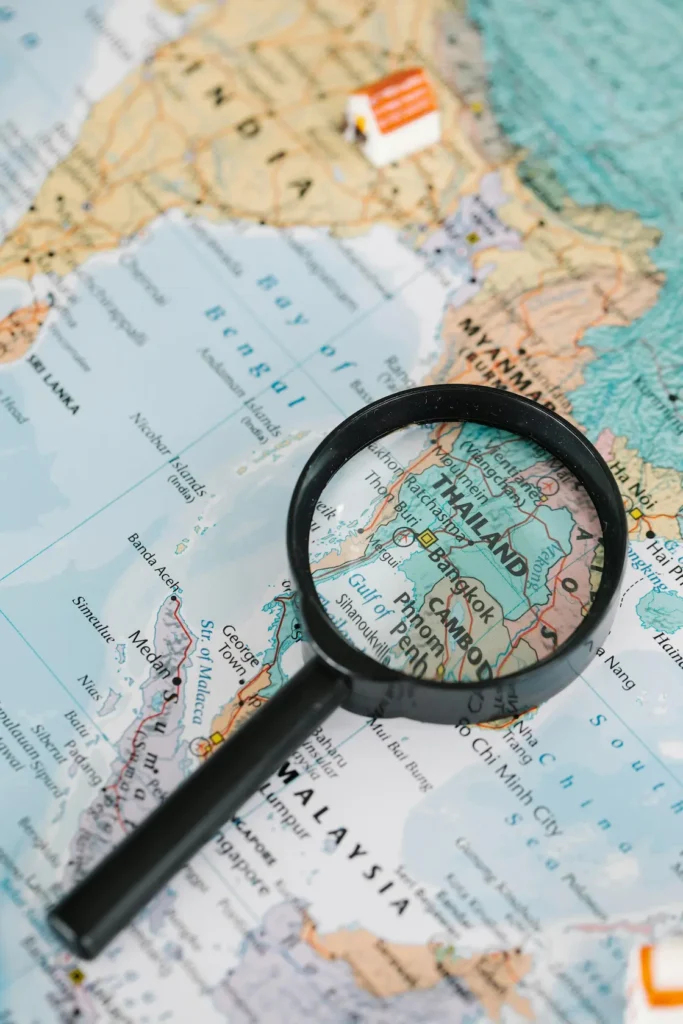
Combining Laos with Nearby Countries
This Laos travel guide explores regional connections:
Popular Multi-Country Routes
Vietnam → Laos Route:
Northern Route:
- Hanoi → Dien Bien Phu → Luang Prabang
- Or: Hanoi → Vinh → Vientiane
Central Route:
- Hue/Da Nang → Savannakhet
- Or: Dong Ha → Sepon → Savannakhet
Best Itinerary:
- 10 days Vietnam (Hanoi, Halong Bay, Hoi An)
- 10-14 days Laos (Luang Prabang, Vang Vieng, Vientiane, 4000 Islands)
- 7-10 days Cambodia (Siem Reap, Phnom Penh, islands)
Laos → Thailand Route:
Options:
- Slow boat Huay Xai → Luang Prabang (enter Laos)
- Or reverse: Luang Prabang → Chiang Rai
- Vientiane → Nong Khai (frequent crossings)
- Pakse → Ubon Ratchathani
Best Itinerary:
- 7-10 days Northern Thailand (Chiang Mai, Chiang Rai)
- 10-14 days Laos (comprehensive route)
- 7-10 days Southern Thailand (islands)
Laos → Cambodia Route:
Connection:
- 4,000 Islands → Stung Treng (Cambodia)
- Direct buses available
- Scenic Mekong route
Best Itinerary:
- 14 days Laos (complete route ending at 4000 Islands)
- 10-14 days Cambodia (north to south: temples, capital, coast)
Border Crossing Tips
Requirements:
- Visa arranged for each country
- Passport valid 6+ months
- Border crossing hours (usually 8am-6pm)
- USD cash for visas
Popular Crossings:
- Thai border: Nong Khai (Vientiane), Chiang Khong (Huay Xai)
- Vietnam border: Lao Bao, Nam Khan
- Cambodia border: Veun Kham
Timing:
- Allow full day for crossings
- Arrive early (borders get backed up)
- Verify current visa requirements
- Check if crossing open (some close for holidays)
Frequently Asked Questions
Is Laos good for first-time Southeast Asia travelers?
Yes, Laos is excellent for beginners. The country’s smaller size makes it manageable, locals are welcoming and patient, prices are affordable, and the relaxed pace is forgiving. English is spoken in tourist areas, infrastructure adequate, and travelers face fewer crowds than Thailand or Vietnam. That said, Laos requires more patience with transportation delays and basic facilities than more developed neighbors.
How many days do I need in Laos?
Minimum 7 days for highlights (Luang Prabang, Vang Vieng, Vientiane). Ideal is 10-14 days allowing comprehensive exploration including 4,000 Islands or Bolaven Plateau. Budget 2-3 weeks for slow travel matching Laos’s pace, including remote areas like Luang Namtha or Nong Khiaw. First-time visitors typically spend 10 days, which provides balanced experience without rushing.
Is Laos cheaper than Thailand and Vietnam?
Laos is slightly cheaper than Thailand but comparable to Vietnam. Accommodation and food cost similarly to Vietnam, while activities and transport sometimes cost slightly more due to limited infrastructure. Budget travelers manage on $25-35 daily in Laos versus $30-45 in Thailand and $25-35 in Vietnam. Overall, Laos offers excellent value but isn’t dramatically cheaper than neighbors.
Do people speak English in Laos?
Basic English is spoken in tourist areas (Luang Prabang, Vang Vieng, Vientiane, 4,000 Islands) especially by younger Lao people and those working in tourism. Outside tourist zones, English proficiency drops significantly. Learning basic Lao phrases greatly helps and earns respect. Download Google Translate offline for communication assistance. Most situations work out through gestures, patience, and smiles.
Is Laos safe for solo travelers?
Yes, Laos is very safe for solo travelers including women. Crime rates are low, locals are friendly and helpful, and aggressive behavior is rare. Standard precautions apply: watch belongings in busy areas, avoid walking alone late at night in unlit areas, don’t accept drinks from strangers, and trust instincts. Solo female travelers report feeling comfortable throughout Laos, though dressing modestly and respecting cultural norms is important.
Can I use US dollars in Laos?
Yes and no. USD is accepted for larger transactions (accommodation, tours, visa fees) but Lao kip is required for daily purchases (food, local transport, market shopping). Some places quote prices in USD but give change in kip at poor exchange rates. Best strategy: use USD for visa and large hotel bills, convert to kip for everything else via ATM or bank exchange. Thai baht is also accepted near borders.
What vaccinations do I need for Laos?
Consult your doctor, but commonly recommended: routine vaccinations (MMR, tetanus, diphtheria), Hepatitis A, Typhoid, and possibly Hepatitis B. Japanese Encephalitis recommended for rural stays during wet season. Rabies suggested for extended trips or if planning remote trekking where medical care is distant. Malaria prophylaxis considered for jungle trekking in remote areas. Complete vaccinations 4-6 weeks before travel.
When is the best time to visit Laos?
November through February offers the best overall conditions: comfortable temperatures (60-85°F), minimal rainfall, clear skies, and all areas accessible. March through May is very hot (85-105°F) but less crowded with lower prices. June through October is wet season featuring afternoon rains, lush landscapes, lowest prices, and fewer tourists—underrated for flexible travelers. Choose based on priorities: guaranteed good weather (Nov-Feb), budget (Jun-Sep), or avoiding crowds (wet season).
Is the Mekong slow boat worth it?
The 2-day slow boat from Thai border to Luang Prabang divides travelers. Yes if you value journey over destination, want scenic river/mountain views, meet fellow travelers, and don’t mind uncomfortable seating. No if you’re on tight schedule, need comfort, or easily bored. Bring cushion for wooden benches, snacks, entertainment, and sun protection. It’s memorable but genuinely uncomfortable—weigh priorities carefully.
Do I need travel insurance for Laos?
Yes, strongly recommended. Medical facilities are limited especially outside cities, and serious cases require evacuation to Thailand (expensive). Insurance should cover medical treatment, emergency evacuation, trip cancellation, and lost/stolen belongings. Adventure activities (rock climbing, caving, motorbiking) may require additional coverage. Cost is minimal ($2-4 daily) compared to risks. Don’t skip it.
Conclusion: Is Laos Worth Visiting?
Absolutely. This Laos travel guide reveals why Laos offers something increasingly rare in modern travel: authenticity, peace, and depth.
Laos Rewards Travelers Who:
- Value culture over shopping
- Prefer nature to nightlife
- Embrace slower pace over rushed itineraries
- Seek genuine connections over Instagram moments
- Accept basic facilities for authentic experiences
You’ll Leave With:
- Refreshed perspective from “Lao time” mentality
- Appreciation for Buddhist traditions
- Memories of stunning natural beauty
- Stories of genuine local interactions
- Understanding of Southeast Asian history
- Desire to return
Laos isn’t for everyone. If you require efficiency, modern infrastructure, and predictable schedules, neighboring countries might suit better. But if you’re open to patience, curiosity, and embracing the unexpected, Laos will reward you with one of Southeast Asia’s most meaningful travel experiences.
Start Planning Your Laos Adventure
📋 Your Action Checklist:
- ✅ Choose travel dates (November-February for weather, June-September for budget)
- ✅ Apply for visa (e-visa online or arrange VOA)
- ✅ Book flights (international to Vientiane or Luang Prabang)
- ✅ Plan rough itinerary (7, 10, or 14 days)
- ✅ Arrange travel insurance
- ✅ Get vaccinations (4-6 weeks ahead)
- ✅ Book first night accommodation
- ✅ Download offline maps and apps
- ✅ Notify banks of travel
- ✅ Pack appropriate clothing and essentials
🗺️ Essential Laos Resources:
🌏 Combine Your Trip:
- Vietnam Travel Guide
- Cambodia Travel Guide
- Thailand Travel Guide (Coming Soon)
📧 Need Personalized Help?
Contact us for custom itinerary planning, specific destination questions, budget advice, or any concerns about your Laos trip. We respond to every question!
💬 Join the Conversation:
Have questions about this Laos travel guide? Planning a trip and need advice? Share your experiences or ask below—we love helping travelers plan their Laos adventures and respond to every comment.
🔖 Save This Guide:
Bookmark this comprehensive Laos travel guide as your planning resource. Share with fellow travelers exploring Southeast Asia. Your Lao adventure awaits!
Last Updated: January 3, 2026
This Laos travel guide is continuously updated with current information, prices, and travel tips. If you notice outdated information or have suggestions, please let us know in the comments.