
Tucked away in northwestern Cambodia, Battambang remains one of Southeast Asia’s best-kept secrets. While Siem Reap draws crowds to Angkor Wat and Phnom Penh buzzes with urban energy, this charming riverside city offers travelers an authentic glimpse into Cambodian culture, colonial architecture, and unforgettable experiences like the famous bamboo train. This comprehensive Battambang travel guide will help you discover why this laid-back city deserves a spot on your Cambodia itinerary.
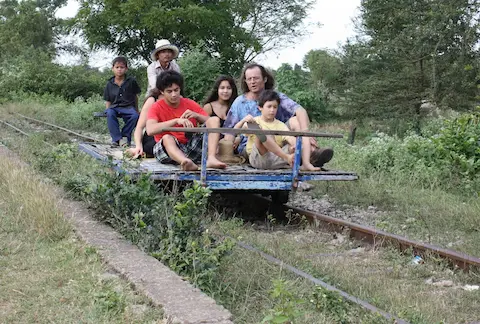
Photo by Henry Flower | Wikimedia Commons (CC BY 3.0)
Whether you’re seeking ancient temples, vibrant art scenes, culinary adventures, or simply a slower pace of travel, Battambang delivers. With its French colonial buildings, thriving creative community, and warm hospitality, Cambodia’s second-largest city provides the perfect blend of culture, history, and adventure without the tourist crowds.
Table of Contents
Table of Contents
Why Visit Battambang in 2026?
Battambang has evolved significantly over recent years, transforming from a sleepy provincial town into a cultural hub while maintaining its authentic charm. Here’s why this destination should be on your radar:
Authentic Cambodian Experience: Unlike more touristy destinations, Battambang offers genuine interactions with locals and insights into everyday Cambodian life. The city moves at a relaxed pace, allowing you to truly immerse yourself in the culture.
Thriving Arts Scene: The city has become Cambodia’s artistic capital, with numerous galleries, circus schools, and creative spaces showcasing local talent. Phare Ponleu Selpak, the renowned circus and arts school, calls Battambang home.
Affordable Travel Destination: Your budget stretches further here compared to Siem Reap or coastal destinations. Accommodation, food, and activities remain remarkably affordable while maintaining quality.
Perfect Base for Exploration: The city’s compact size makes it easy to navigate by bicycle or tuk-tuk, while surrounding countryside attractions are all within easy reach for day trips.
👉 Also Read Siem Reap Cambodia Travel: Ultimate Guide to Angkor’s Gateway
Getting to Battambang
Planning your journey to Battambang is straightforward, with multiple transportation options available from major Cambodian cities.
From Siem Reap
The most scenic route connects Siem Reap to Battambang via boat along the Tonle Sap Lake and Sangker River. This journey takes approximately 6-8 hours depending on water levels and offers stunning views of floating villages and rural landscapes. However, during the dry season (December to May), low water levels may make this route unavailable.
Alternatively, buses and shared taxis cover the 170-kilometer journey in about 3-4 hours on improved roads. Several bus companies operate this route daily, with tickets costing $6-10 per person.
From Phnom Penh
Regular buses depart from Phnom Penh throughout the day, covering the 290 kilometers in approximately 5-6 hours. Companies like Giant Ibis, Virak Buntham, and Capitol Tours offer comfortable coaches with air conditioning. Expect to pay $6-15 depending on the service level.
Private taxi services are also available for around $50-70, offering more flexibility and comfort for groups.
From Thailand
Travelers coming from Thailand can cross at the Poipet border checkpoint and take a taxi or bus to Battambang, approximately 2 hours away. This makes Battambang an excellent first or last stop on a Cambodia-Thailand adventure.
When to Visit: Best Time for Your Battambang Trip
Timing your visit to Battambang can significantly impact your experience. This Battambang travel guide recommends considering both weather and cultural events when planning.
Peak Season (November to February)
These months offer the most comfortable weather, with cooler temperatures ranging from 20-30°C (68-86°F) and minimal rainfall. The countryside is lush and green following the rainy season, making it perfect for temple visits and countryside cycling. However, this is also the busiest tourist period, so book accommodations in advance.
Hot Season (March to May)
Temperatures soar to 35-40°C (95-104°F), making midday activities challenging. However, you’ll encounter fewer tourists and better accommodation deals. Early morning and late afternoon activities remain pleasant.
Rainy Season (June to October)
While afternoon showers are common, mornings typically remain clear. The countryside becomes spectacularly green, rice paddies flourish, and you’ll have many attractions to yourself. This budget-friendly season offers the most authentic local experience as daily life continues around you.
👉 Also Read Best Time to Travel to Vietnam and Cambodia: Complete Guide
Top Attractions: Must-See Experiences in Battambang
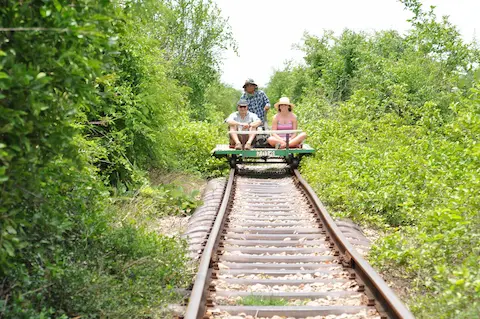
The Bamboo Train (Norry) | Photo by shankar s | Wikimedia Commons (CC BY 2.0)
The Bamboo Train (Norry)
No Battambang travel guide would be complete without highlighting this unique experience. The bamboo train, locally known as “norry,” is one of the world’s most unusual modes of transport and Battambang’s signature attraction.
Originally designed as practical transportation for locals, the bamboo train now operates primarily for tourists but remains an exhilarating experience. Your “train” consists of a bamboo platform mounted on wheels, powered by a small engine that propels you along disused railway tracks at surprising speeds.
The 7-kilometer journey through rice paddies, past rural villages, and over wooden bridges takes about 30 minutes each way. The highlight? When two trains meet on the single track, the less-loaded one is quickly disassembled and moved aside—a process that takes just minutes and showcases Cambodian ingenuity.
Practical Information:
- Location: O Dambong village, about 5km from Battambang city center
- Cost: $5-10 per person (often included in tour packages)
- Best time: Late afternoon for golden-hour photography
- Duration: Approximately 1 hour round trip
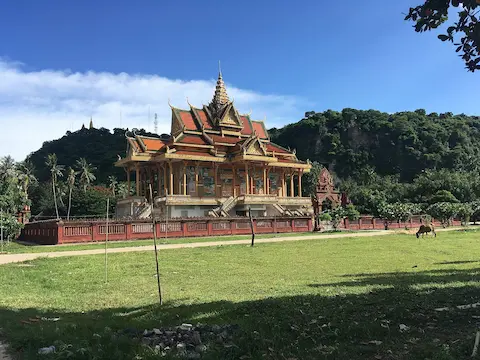
Phnom Sampeau | Photo by Christophe95 | Wikimedia Commons (CC BY 4.0)
Phnom Sampeau: Mountain Temple Complex
Rising 100 meters above the surrounding plains, Phnom Sampeau offers some of the region’s most spectacular views alongside sobering historical significance. This mountain complex combines natural beauty, religious sites, and dark history.
The summit features an active Buddhist temple where monks reside and locals come to pray. The climb requires navigating approximately 700 steps, but the panoramic views of endless rice paddies and distant mountains reward your effort.
However, Phnom Sampeau also holds tragic significance as a Khmer Rouge killing site. The “Killing Caves” contain a memorial to victims executed here between 1975-1979. A glass-enclosed shrine displays human remains and serves as a powerful reminder of Cambodia’s recent history.
The Bat Exodus: Return to the base at sunset (around 5:30-6:00 PM) to witness millions of bats streaming from their cave dwelling in an extraordinary natural phenomenon. The exodus continues for 20-30 minutes as bats depart for their nightly hunt.
Practical Tips:
- Entrance fee: $2-3
- Dress code: Covered shoulders and knees for temple areas
- Bring water and sun protection
- Allow 2-3 hours to explore thoroughly
👉 Also Read Travel to Phnom Penh Cambodia: Your Complete Guide
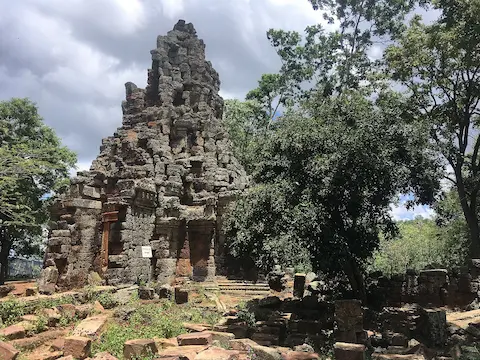
Phnom Banan Temple | Photo by Christophe95 | Wikimedia Commons (CC BY 4.0)
Phnom Banan Temple
Often called “mini Angkor Wat,” this 11th-century Angkorian temple sits atop a hill 25 kilometers south of Battambang. While smaller than its famous cousin, Phnom Banan offers remarkable architecture, intricate carvings, and far fewer visitors.
The temple complex features five towers arranged in a quincunx pattern, similar to Angkor Wat’s layout. Hindu influences are evident in the stone carvings depicting scenes from Hindu mythology.
Reaching the temple requires climbing 358 steps—considerably fewer than Phnom Sampeau but steep nonetheless. The surrounding countryside views showcase rural Cambodia at its most picturesque, with emerald rice paddies stretching to the horizon.
Insider Tip: Visit early morning to avoid heat and have the temple virtually to yourself. The soft morning light creates magical photography conditions.
What to Know:
- Distance from city: 25km (about 45 minutes by tuk-tuk)
- Entrance fee: $2-3
- Best combined with: Nearby Wat Ek Phnom ruins
- Time needed: 1.5-2 hours
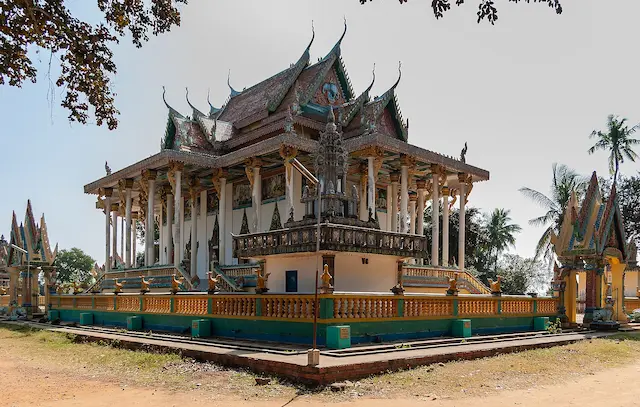
Wat Ek Phnom | Photo by Stefan Fussan | Wikimedia Commons (CC BY 1.0)
Wat Ek Phnom
This partially ruined 11th-century temple complex lies just 12 kilometers north of Battambang and makes an excellent half-day excursion. Unlike Phnom Banan, Wat Ek Phnom sits on flat ground, making it accessible for all fitness levels.
The sandstone temple features remarkable Hindu carvings despite significant deterioration. A modern Buddhist pagoda has been constructed on the same grounds, creating an interesting juxtaposition of ancient ruins and contemporary religious practice.
The site remains relatively undiscovered by mass tourism, offering peaceful exploration opportunities. Local children may approach offering guide services, and while not necessary, their knowledge of hidden carvings and best photo spots can enhance your visit.
Planning Your Visit:
- Entrance fee: $3
- Best time: Morning or late afternoon
- Duration: 1 hour
- Can combine with: Bat caves or countryside cycling
Ek Phnom Bat Caves
Near Wat Ek Phnom, these caves house thousands of bats in a less-touristy setting than Phnom Sampeau. Local guides (usually children) lead torch-lit walks through the caves. While not essential to visit, they offer an adventurous side trip.
👉 Also Read Cambodia Travel Itinerary: Perfect 7-14 Day Routes (Expert Guide)
Cultural Experiences and Activities
Phare Ponleu Selpak Circus
This acclaimed circus school and arts organization provides opportunities for disadvantaged youth to learn performance arts, music, and visual arts. The evening circus performances showcase incredible acrobatics, juggling, and storytelling that blend traditional Khmer culture with contemporary circus arts.
Founded in the 1990s to help children affected by war and poverty, Phare Ponleu Selpak (meaning “The Brightness of the Arts”) has become internationally recognized. Several graduates have joined Cirque du Soleil.
Show Information:
- Performances: Monday and Thursday evenings at 7:00 PM
- Cost: $8-18 depending on seating
- Duration: Approximately 90 minutes
- Book in advance during peak season
Cooking Classes
Several organizations offer hands-on Cambodian cooking classes that begin with morning market visits. You’ll learn about local ingredients, traditional cooking methods, and prepare classic dishes like amok (coconut curry), lok lak (stir-fried beef), and nom banh chok (Khmer noodles).
Popular options include Nary Kitchen, Coconut Lyly, and Smokin’ Pot. Classes typically run 3-4 hours and cost $15-25 per person, including meals.
Countryside Cycling Tours
Battambang’s flat terrain and scenic rural roads make it ideal for cycling. Several tour companies offer half-day or full-day guided bicycle tours through rice paddies, past traditional stilt houses, and to village workshops.
These tours often include stops at:
- Rice paper making villages
- Traditional fish paste production
- Local markets
- Family-run rice wine distilleries
- Bamboo sticky rice makers
Recommended Tours:
- Soksabike: Social enterprise supporting education
- Battambang Bike: Eco-friendly tours with excellent guides
- Cost: $20-30 per person including lunch
Traditional Village Workshops
The surrounding countryside hosts numerous artisan villages where traditional crafts continue as they have for generations. Many tours visit these workshops, but independent travelers can also explore:
Rice Paper Village: Watch families stretch rice paste into paper-thin sheets, dry them in the sun, and prepare them for cooking.
Bamboo Sticky Rice Village: Locals stuff glutinous rice and coconut into bamboo tubes, then roast them over charcoal fires.
Fish Paste (Prahok) Production: This pungent fermented fish paste is essential to Khmer cuisine. The production process is fascinating, though the smell is powerful!
👉 Also Read Best Cambodia Travel Cost: Budget $30-100 Daily
Colonial Architecture and City Exploration
Battambang’s architectural heritage reflects its French colonial past and Cambodia’s Art Deco period. The riverside area features dozens of well-preserved colonial buildings with distinctive yellow facades, wooden shutters, and decorative balconies.
Notable Buildings
The Governor’s Residence: This grand colonial mansion near the river now houses local government offices but remains architecturally impressive.
Battambang Provincial Museum: Beyond its collection of Angkorian artifacts, the building itself exemplifies colonial architecture.
Old French Quarter: Streets near Psar Nat market contain the highest concentration of colonial buildings, many now housing cafes, guesthouses, and shops.
Riverside Walk
Strolling along the Sangker River, particularly during late afternoon, offers lovely views and insight into local life. Families gather, vendors sell snacks, and you can observe fishermen working traditional nets. The riverside area comes alive during sunset when locals exercise, socialize, and enjoy the cooler temperatures.
Where to Stay: Accommodation in Battambang
This Battambang travel guide covers options for every budget, from backpacker hostels to boutique hotels.
Budget Options ($5-20 per night)
Battambang My Homestay: Family-run guesthouse offering clean, simple rooms with genuine Khmer hospitality. Perfect for budget travelers seeking local interaction.
Here Be Dragons: Popular hostel with social atmosphere, organizing events and tours. Dorm beds available.
Nature Bungalow Homestay: Peaceful location slightly outside town with garden setting and bicycles available.
Mid-Range ($25-60 per night)
La Villa: Beautifully restored colonial building with swimming pool, excellent restaurant, and charming rooms featuring period details.
Maisons Wat Kor: Boutique hotel in traditional wooden houses, combining authentic Khmer architecture with modern comfort.
Bambu Hotel: Contemporary hotel with rooftop pool, comfortable rooms, and central location near the river.
Luxury Options ($70+ per night)
Emerald Battambang Hotel: Modern luxury hotel with spacious rooms, large pool, spa facilities, and professional service.
Classy Hotel & Spa: Upscale property offering refined accommodation, spa treatments, and fine dining.
Tip: Book directly with properties for better rates and supporting local businesses. Many boutique hotels are family-owned and offer personalized service.
👉 Also Read Travel to Phnom Penh Cambodia: Your Complete Guide
Where to Eat: Battambang’s Food Scene
Battambang’s culinary scene has flourished, offering everything from street food to fine dining, local Khmer specialties to international cuisine.
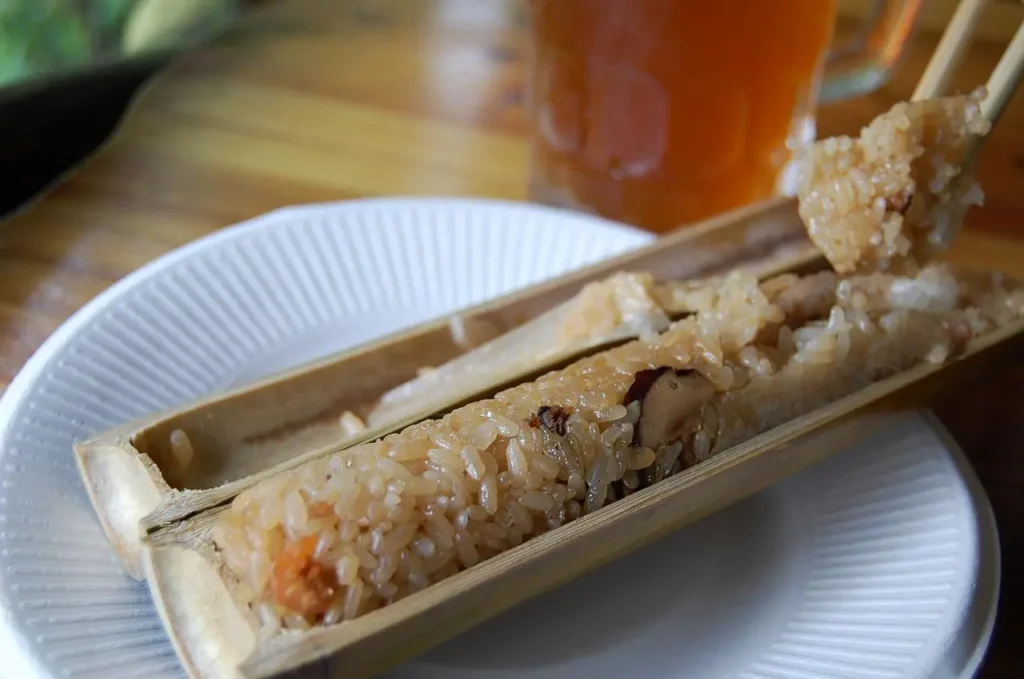
Photo by Yusuke Kawasaki | Wikimedia Commons (CC BY 2.0)
Must-Try Local Dishes
Bai Sach Chrouk: Grilled pork over broken rice with pickled vegetables—Cambodia’s favorite breakfast, available at morning markets for under $1.
Num Banh Chok: Fresh rice noodles topped with green curry sauce, often served with herbs and vegetables. The “Khmer noodles” are a daily staple.
Bamboo Sticky Rice: Sweet or savory rice cooked inside bamboo tubes, creating a uniquely flavored and aromatic dish.
Recommended Restaurants
Jaan Bai: Social enterprise restaurant training disadvantaged youth. Excellent contemporary Khmer cuisine in stylish setting. Reservations recommended.
Lonely Tree Cafe: Popular spot for breakfast and lunch, offering Western and Asian dishes. The smoothie bowls are legendary.
Riverside Balcony Bar: Perfect sunset location serving solid food, excellent cocktails, and river views.
The Cooking Class by Nary: Beyond cooking classes, their restaurant serves authentic home-style Khmer food.
White Rose: Long-standing favorite for reliable Khmer and Western dishes in a charming colonial building.
Street Food: Don’t miss the evening food stalls near Psar Nat market, offering grilled meats, fresh spring rolls, and local desserts for incredibly low prices.
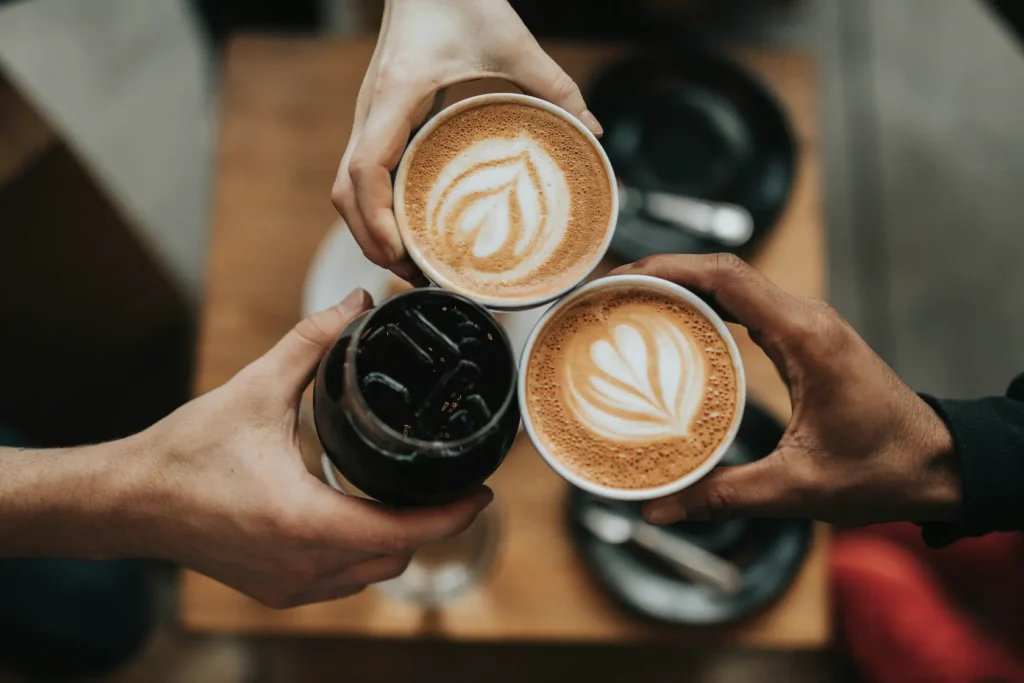
Coffee Culture
Battambang’s coffee scene rivals Phnom Penh’s, with several excellent cafes:
- Cafe Eden: Artisan coffee and healthy food in garden setting
- Fresh Donuts Cafe: Great coffee and—you guessed it—fresh donuts
- Kinyei Cafe: Social enterprise supporting education, serving excellent coffee
Shopping and Markets
Psar Nat (Central Market)
This large covered market operates daily and serves as Battambang’s commercial heart. The sprawling complex contains everything from fresh produce and meat to clothing, electronics, and household goods. Early morning visits offer the most authentic experience as locals shop for the day’s ingredients.
Phsar Boeung Choeuk
This morning market specializes in fresh produce and operates from 5:00 AM until around 10:00 AM. It’s less touristy than Psar Nat and excellent for photographers interested in capturing daily Cambodian life.
Art Galleries and Boutiques
Lotus Pond Gallery: Features contemporary Cambodian artists and traditional crafts. Quality items with fair prices.
Pomme: Boutique selling clothing, accessories, and homeware from local designers.
Khmer Ceramics & Fine Arts Centre: Watch artisans create traditional pottery using ancient techniques.
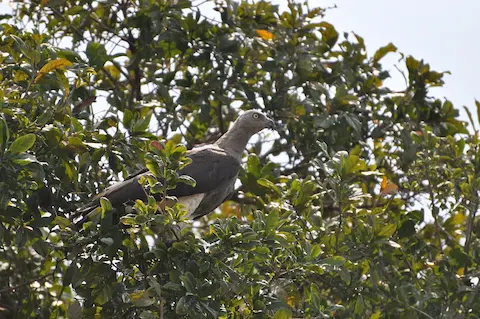
Photo by shankar s | Wikimedia Commons (CC BY 2.0)
Day Trips from Battambang
Prek Toal Bird Sanctuary
Located on Tonle Sap Lake, this internationally recognized bird sanctuary protects endangered water birds including spot-billed pelicans, painted storks, and milky storks. The 2-hour journey through floating villages is an adventure itself, followed by guided boat tours through the flooded forest.
Details:
- Best season: December-April when water birds nest
- Cost: $35-50 per person including guide and boat
- Duration: Full day (8-10 hours)
- Advanced booking essential
Kamping Puoy Lake
This large reservoir created during the Khmer Rouge era now serves as a peaceful picnic spot and swimming area. Bamboo platforms over the water offer places to relax, eat, and swim. The bamboo train route continues to the lake, allowing combination visits.
Banteay Chhmar Temple
For serious temple enthusiasts, this massive 12th-century complex lies 160 kilometers north of Battambang. Less restored than Angkor temples, Banteay Chhmar offers adventurous exploration of impressive ruins, intricate carvings, and atmospheric jungle settings. Community-based tourism initiatives provide homestays in the adjacent village.
👉 Also Read Best Time to Travel to Vietnam and Cambodia: Complete Guide
Practical Information for Your Battambang Visit
Money Matters
Cambodia uses both Cambodian Riel (KHR) and US Dollars (USD). Most businesses accept both, with change often given in riel. ATMs dispense US dollars and are widely available in Battambang’s center. Credit cards are accepted in higher-end hotels and restaurants but cash remains king for most transactions.
Budget Planning:
- Budget travelers: $20-30 per day
- Mid-range travelers: $40-70 per day
- Luxury travelers: $100+ per day
Getting Around Battambang
Tuk-Tuks: The primary transportation for visitors. Day rates for touring attractions range from $15-25 depending on itinerary. Always agree on prices beforehand.
Bicycles: Many guesthouses rent bicycles for $2-5 daily. The flat terrain makes cycling ideal for exploring the city and nearby countryside.
Motorbike Rental: Available for $5-8 daily if you’re comfortable riding. Bring your own helmet or purchase one locally.
Walking: The city center is compact and walkable, though heat can be challenging midday.
Safety and Health
Battambang is generally very safe for travelers. Standard precautions apply: watch belongings in crowded markets, avoid walking alone late at night in unlit areas, and be cautious when crossing streets (traffic can be chaotic).
Health Considerations:
- Drink only bottled or filtered water
- Use mosquito repellent, especially at dusk
- Consider malaria prophylaxis if visiting rural areas during rainy season
- Ensure vaccinations are current
- Travel insurance is highly recommended
Connectivity
Many hotels, cafes, and restaurants offer free WiFi. Local SIM cards with data are inexpensive ($5-15 for tourist packages) and widely available. Main providers include Smart, Cellcard, and Metfone.
Responsible Tourism
Battambang’s charm lies partly in its authenticity and lack of mass tourism. Help preserve this by:
- Supporting social enterprises and local businesses
- Respecting religious sites with appropriate dress and behavior
- Asking permission before photographing people
- Not giving money or candy to children (support education instead)
- Using reusable water bottles
- Choosing ethical animal encounters
Sample Itineraries
2-Day Battambang Itinerary
Day 1:
- Morning: Explore colonial architecture on foot, visit Battambang Museum
- Lunch: Try Khmer cuisine at Jaan Bai
- Afternoon: Bamboo train experience
- Late afternoon: Phnom Sampeau temple and bat exodus
- Evening: Dinner at riverside restaurant
Day 2:
- Early morning: Countryside cycling tour through villages
- Lunch: Included in tour or return to city
- Afternoon: Phnom Banan temple
- Evening: Phare circus performance
3-4 Day Battambang Itinerary
Add to the 2-day itinerary:
- Cooking class with market tour
- Wat Ek Phnom and surrounding temples
- Kamping Puoy Lake relaxation
- Art gallery visits and shopping
- Sunset river cruise
Frequently Asked Questions (FAQ)
Is Battambang worth visiting?
Absolutely! Battambang offers authentic Cambodian experiences without overwhelming tourist crowds. The combination of unique attractions (bamboo train), colonial charm, cultural experiences (circus, cooking classes), and genuine hospitality makes it a highlight for many travelers. It’s particularly worthwhile if you’re seeking to understand Cambodian culture beyond temples.
How many days should I spend in Battambang?
This Battambang travel guide recommends 2-3 days minimum. Two days cover major attractions like the bamboo train, temples, and bat caves. Three to four days allow for cycling tours, cooking classes, circus performances, and more relaxed exploration. The laid-back atmosphere often convinces travelers to stay longer than planned.
Is Battambang safe for solo travelers?
Yes, Battambang is very safe for solo travelers, including solo female travelers. The city has low crime rates and locals are friendly and helpful. Standard travel precautions apply: stay aware of surroundings, avoid unlit areas at night, and trust your instincts. Many solo travelers actually find Battambang easier and more welcoming than larger cities.
What’s better: Siem Reap or Battambang?
They offer different experiences. Siem Reap is essential for Angkor Wat and has more tourist infrastructure. Battambang provides authentic local experiences, colonial architecture, and unique attractions like the bamboo train. Many travelers visit both—they’re only a few hours apart and complement each other perfectly. If you have limited time, Siem Reap takes priority for first-time Cambodia visitors, but Battambang deserves inclusion on longer trips.
Can I do the bamboo train year-round?
Yes, the bamboo train operates throughout the year, though heavy rains might occasionally cause brief closures. The experience remains consistent regardless of season, though late afternoon rides during dry season offer the best photography light. Always check current conditions, as tourism developments sometimes affect operations.
How much does it cost to visit Battambang?
Battambang is remarkably affordable. Budget travelers can comfortably visit for $20-30 daily, mid-range travelers $40-70, and luxury travelers $100+. Accommodation ranges from $5 hostel dorms to $100+ boutique hotels. Most attractions cost $2-5, except organized tours ($20-50). Food is inexpensive with street meals under $2 and restaurant meals $5-15.
What should I pack for Battambang?
Lightweight, breathable clothing suitable for hot weather, covered shoulders and knees for temples, comfortable walking shoes, sun protection (hat, sunscreen, sunglasses), mosquito repellent, reusable water bottle, small backpack for day trips, light rain jacket (rainy season), and any necessary medications. Most forgotten items are available in Battambang at affordable prices.
Conclusion: Your Battambang Adventure Awaits
Battambang represents the Cambodia many travelers dream of discovering—authentic, charming, culturally rich, and still relatively untouched by mass tourism. This Battambang travel guide has shown you that beyond the famous bamboo train and bat caves lie deeper rewards: meaningful cultural exchanges, artistic inspiration, colonial elegance, and the simple pleasure of life moving at a gentler pace.
Whether you’re watching millions of bats stream from Phnom Sampeau’s caves, rattling along railway tracks on a bamboo platform, exploring crumbling temple ruins with only birds for company, or sharing conversation over coffee with local artists, Battambang creates memories that transcend typical tourist experiences.
The city’s transformation into Cambodia’s cultural capital while maintaining authentic local life represents a delicate balance that won’t last forever. As word spreads and tourism increases, the intimate, undiscovered atmosphere that makes Battambang special will gradually change.
Now is the perfect time to discover this riverside gem before everyone else does. The temples await, the bamboo train is ready to roll, and the warm smiles of Battambang’s residents welcome you to explore Cambodia’s most charming city.
Ready to Explore Battambang?
Start planning your Battambang adventure today! Whether you’re adding it to a broader Cambodia itinerary or making it your primary destination, this enchanting city promises experiences you’ll treasure long after you’ve returned home.
Next Steps:
- Book your accommodation (especially for peak season travel)
- Research current transportation options from your arrival city
- Consider travel insurance for peace of mind
- Download offline maps for easier navigation
- Connect with tour operators for cooking classes or cycling tours
Have questions about planning your Battambang trip? Drop a comment below or reach out—we’re here to help make your Cambodian adventure unforgettable!
Share this Battambang travel guide with fellow travelers planning their Cambodia journey, and subscribe to our newsletter for more Southeast Asia travel inspiration, practical tips, and hidden gems waiting to be discovered.
Plan Your Perfect Battambang Travel Guide
📧 Have questions about planning your Battambang Travel Guide? Drop a comment below or Contact us for personalized budget travel advice
🗺️ Check Out Our Other guides:
- Cambodia Travel – Complete Cambodia Travel Guide
- Laos Travel – Check for our Laos Adventure
- Vietnam Travel – You can start your South East Asia adventure here
✈️ Ready to book? Check current flight deals to Cambodia and top-rated hostels.
Pin this guide for later! Save this comprehensive Battambang travel guide to your Cambodia or Southeast Asia Pinterest boards and start dreaming of bamboo trains, ancient temples, and authentic adventures.
Safe travels, and enjoy every moment in beautiful Battambang!
Last Updated: January 26, 2026